One More Year of Choices
By Barbara Dahlgren

When governor Zerubbabel was faced with the task of rebuilding Jerusalem and the temple, he faced many obstacles. Fifty years had passed since the Babylonian invasion left Jerusalem desolate and Solomon’s Temple (also known as the First Temple) burned to the ground. It became obvious this second temple would never have the grandeur of the first. Even after the foundation was laid, some old timers wept thinking of the comparison. (Ezra 3:12)
Yet amidst this small beginning God told the people not to be discouraged for the second temple would be completed through Zerubbabel. He also asked a rhetorical question that contains a life lesson for all of us: “For who hath despised the day of small things?” (Zechariah 4:10 KJV) The people could only see what was in front of them, not what God would do with it. How many of us are guilty of the same reasoning?
In a world that measures significance by size, we can think small things have little value. Yet little things mean a lot to God. Things like…
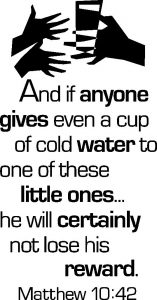
- Giving a cold drink of water to little ones (Matthew 10:42)
- Feeding the hungry (Matthew 25:43-45)
- Visiting those in prison (Matthew 25:43-45)
- Visiting the fatherless and the widows (James 1:27)
- A widow’s mite (Mark 12:41-44)
- Sharing what little you have (John 6:9-13)
- Little children (Matthew 18:1-5)
- Little flocks (Luke 12:32)
The parables are full of analogies made with small things: one talent, sowing seeds, a lost coin, one lost sheep, a grain of mustard seed, and a little leaven. The list could go on and on.
What about people? Sarah, a barren woman, gave birth to God’s chosen people. David, a mere shepherd boy, used a slingshot to kill Goliath. That same shepherd boy became king. A small boy helped feed a multitude with three fishes and five loaves of bread. Moses, a baby saved in the bulrushes, grew up to deliver Israel from bondage. Esther, a lowly young woman, became a queen and put her life on the line to save the Jews from a deadly plot. Jesus was born in a stable in some obscure town, yet offers salvation to the world.
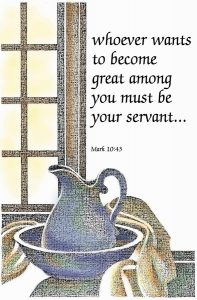 In fact, Jesus’ life was spent doing small things for others. We could call them acts of kindness. He comforted the sick. He befriended the sinner. He hung out with the fishermen. He paid attention to little children. He washed the disciples’ feet. He told us if we wanted to be great we should do the same thing – learn to serve others. (Mark 10:42-45)
Consider this… God does not despise the small things. He does not measure significance by size. There can be power in small things. A little match can cause a big fire. A tiny acorn can produce a giant oak tree. Little drops of water can fill an ocean. Tiny grains of sand can make a beach.
Little things mean a lot to God. Always remember that God can take any little thing we do and multiply it for His glory.
Suggestions for practicing this choice…
- Think of some little things you might do to brighten someone’s day: smile, be polite, let someone go ahead of you in line, write a note of appreciation, etc.
- Small acts of faith, kindness, generosity, and service may seem to go unnoticed, but they do not. They don’t go unnoticed by others, and they don’t go unnoticed by God.
- Pray about the little things in your life as well as the big ones. God is interested in everything about our daily routine.
- Think about this: Adam was created as a full grown man and Jesus could have come to earth that way as well, but He chose to come as a little child. Little things mean a lot.
- Next time you hear Satan whisper in your ear, “You are worthless, puny, and unimportant. What you do doesn’t matter. Why continue on? What’s the use?” God does not want us to believe these lies. Choose to listen for God’s voice. He’ll be saying, “Take heart, my child. Do not believe these lies or become weary. Believe me. Trust me. You are very valuable to me. Every little thing you do matters to me. I love you and will never leave or forsake you.”
 Last time we explored what it means to be a “know-it-all.” This time we will talk about being a fool. While it’s true all “know-it-alls” are fools, it is also true that not all fools are “know-it-alls.” There is a fool bigger than the person who knows it all; it’s the person who argues with him.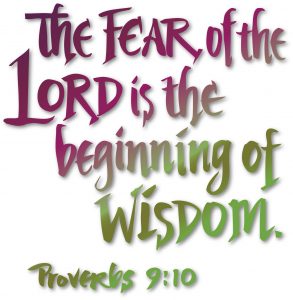
 The Bible exhorts us to grow in the grace and knowledge of our Lord and Savior, Jesus Christ. (2 Peter 3:18) Such spiritual maturity is expected of a Christian. However, there are many things that might make this growth difficult, such as fears, worries, trials, critics, busyness, stress, and distractions. Yet, people manage to grow in spite of these circumstances, learning to trust Christ more than themselves. However, there is one barrier to growth that is very difficult to overcome. It’s hard to grow if you already know it all!



 I guess some idioms will soon be obsolete. Those who grow up reading books on Kindles may one day not even know what “judging a book by its cover” means. We may have to think of a better phrase to let people know that prejudging one’s quality, talent, or character just by looking at a person is a mistake.
 One More Year of Choices…
 The phrase “no man is an island” was first written in 1624 by the famous Elizabethan poet, minister, and scholar John Donne in his Devotions – Meditation XVII. The poem is quite dated by today’s standards, but it inspired a song with lyrics that ring true for all generations.
 After years of bondage in Egypt, it was only natural that the Israelites had absorbed quite a bit of the Egyptian culture. When God delivered them, He wanted them to be a separate people – an example to surrounding nations. To accomplish this, God provided them with a set of laws. If the Israelites obeyed this covenant, God said that they would be His “…treasured possession…and a holy nation.” (Exodus 19:5-6)
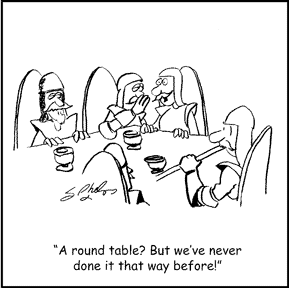
 Our last blog focused on gossip. This time we will talk about rumors. On the surface, it may appear these are the same thing. While there is a distinct overlap, there are also nuances that differentiate the two. There are elements of gossip that can mean to merely chit-chat. For example: “Did you see John’s new car?”; “Mary lost weight and looks great?”; “The Smiths had twins.” However, rumors usually have a malicious intent. They can’t be substantiated or verified, and have no discernable source for truth.