Choose to Forgive

A Year of Choices…

By Barbara Dahlgren from Barbara’s Banter at www.barbdahlgren.com

 

Today I Choose to ForgiveStudies show that those who master the art of forgiveness live longer, healthier lives.  This means that psychologists, doctors, and scientists are embracing an idea considered mostly theological in the past.


According to the Mayo Clinic here are just a few of the health benefits of forgiveness…

  • Healthier relationships
  • Greater spiritual and psychological well-being
  • Less anxiety, stress and hostility
  • Lower blood pressure
  • Fewer symptoms of depression
  • Lower risk of alcohol and substance abuse
  • Stronger immune system
  • Less negative emotions like anger, bitterness, and resentment

So everyone agrees that forgiveness is good.  However, in the words of C.S. Lewis, “Everyone says forgiveness is a lovely idea, unless they have something to forgive.”  In other words, it is easier said than done.

It might be easier to embrace the concept of forgiveness if we understand that forgiveness is not necessarily the following:  forgetting, reconciling, or restoring.  These may come in time after forgiveness, but are definitely not instantaneous.  God admonishes us to forgive (Colossians 3:13, Ephesians 4: 32, Luke 17:4), but he does not tell us to trust the untrustworthy, condone unchristian behavior, let everyone walk all over us, or prevent accountability.  These perceived misconceptions can block an attitude of forgiveness.

On the other hand, forgiveness is not earned.  Many of us play the “if only” game.  We think we would forgive someone “if only” they would apologize or admit what they did.  But that’s not how forgiveness works.  In fact, many people we might need to forgive may never acknowledge they’ve done us wrong.  Yet, we forgive them anyway.

Forgiveness relinquishes our right to retaliate, get even, seek revenge, or have an “eye for an eye” mentality.

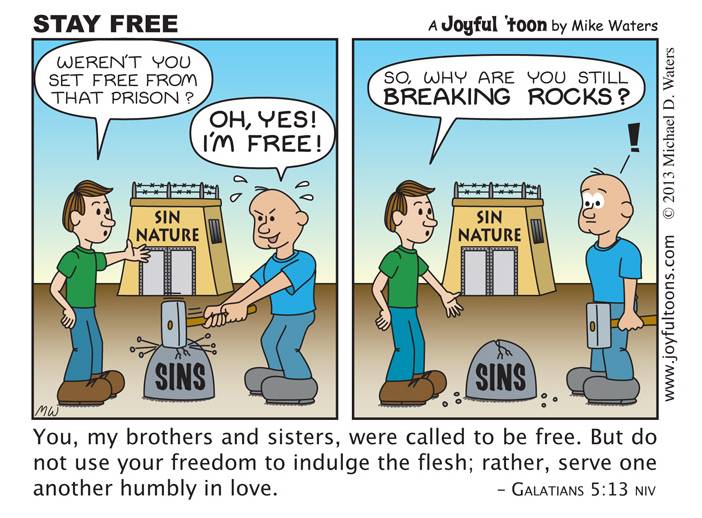
Now on the surface forgiveness appears to be a selfless act, but it really isn’t because forgiveness is a gift we give  ourselves as well as others.  Sometimes the person we are forgiving doesn’t even know it.  Sometimes a person knows it but doesn’t care.  It doesn’t matter.  For in relinquishing this “right” we trade caustic, self-destructive elements such as anger, resentment, and bitterness for peace.  We can cross over from being a victim to being a survivor.  We can get on with our lives.  We can stop the past from dictating our present or future.  As Lewis Smedes puts it, “To forgive is to set a prisoner free and discover that the prisoner was you.”

Consider this…All of us at one time or another have had someone betray us, hurt us, emotionally wound us, or do us wrong.  So humanly speaking we think we have a justifiable “right” to hurt back or retaliate.  When we forgive, we relinquish that “right.”  We let God take care of any vengeance he thinks should take place.  (Romans 12:19-21)  We trust God to take care of it in his way and in his time.

Forgiveness is a gift you give yourself...

Forgiveness is the first step on a journey to healing.  It doesn’t happen overnight.  It’s a hard and sometimes long process but truly worth the effort.  Fostering forgiveness benefits not only our physical life but our spiritual and emotional well-being as well.  Forgiveness is a win/win situation.  When we do it for others, we are really doing it for ourselves.

Suggestions for practicing this choice…

Think about this formula when you are struggling with the process of forgiveness.  I read this a few years ago, cut it out, and use it for reference often.  The first letter of each bullet point spells out the word forgive.  It’s taken from the article The Freedom of Forgiveness by Florence MacKenzie in the magazine Just Between Us, summer edition 2011.

  • Face the fact that withholding forgiveness feeds anger,     bitterness, and resentment.
  • Openly admit these feelings to God.
  • Remind yourself that God, in Christ, has forgiven you.
  • Give up your right to pay back your offender.
  • Invite the Holy Spirit’s help as you begin the process of forgiveness.
  • View your offender as one whom God will deal with justly.
  • Embrace the freedom that forgiving your offender brings.
Posted in Uncategorized | Leave a comment

Choose to Act Instead of React

Act.ReactWhile we may not be able to control everything that happens to us, we are still responsible for how we think, act, feel and respond in any given situation.  At times our choices may be limited, but we can still choose to “act” responsibly instead of “react” negatively.  Will we respond with strength or weakness, courage or despair, love or hate?  How we respond makes a big difference in our quality of life.

When we “react” to what life throws our way, we allow circumstances and other people to determine our behavior.  We let our emotions control what we do.  Many times reacting is an auto-pilot response resulting from previous programmed behavior.  In other words, we don’t really think about our responses we just react subconsciously based on what we’ve always done.  Old habits die hard.

However, when we “act” we make a conscious choice.  We have to actually think and evaluate each situation.  Our goal should be to do what God’s Word would have us do, not what we want to do or what we feel like doing.  Therefore each circumstance becomes a learning experience, helping us grow in grace and knowledge.

Daily life is full of stress, frustration, and offense.  What do we do when faced with a whiney kid, annoying spouse or difficult boss?  What do we do when we feel hassled?  Do we lash out, blow up in anger, say hurtful things, or try to get even?  Scriptures teach us that these are not healthy responses and will not produce positive results.

We can determine some of our responses by planning ahead.

When we are stuck in a traffic jam do we fuss, fume and make ourselves miserable?  Those are reactions that do not produce good fruit.  When we drift into the habit of reacting, even minor irritants become monumental.  We lose perspective.   Since we all know traffic jams are inevitable why not decide ahead of time how to act when they happen.  Perhaps when a traffic jam occurs we could plan to listen to music, listen to a book on CD, count our blessings, thank God we aren’t in the accident causing the jam, pray for the person who is, or meditate on Jesus’ teachings.

When someone is rude do we react by being rude too?  Do we say, “Are you always so stupid or is today a special occasion?”  Or “Keep talking and maybe someday you’ll say something intelligent!”  God tells us how to deal with difficult people in Luke 32:32-36.  If we internalize scripture we can determine ahead of time that we will consciously choose to be gracious even when others are not.  We will be courteous and respectful to everyone – friends and enemies.

Here’s a simple formula for learning how to act instead of react:

  • Evaluate each situation in the light of God’s Word and personal core values.  Using these gauges can help determine a code of conduct to live by and make wise decisions.
  • Pray about it.  Even quick, simple prayers can be effective.
  • Think before speaking.
  • Choose how to act in a Christian manner.  Even choosing not to respond can be a conscious, thought out decision or action.

Take Every Thought Captive

Consider this… Automatic thoughts which lead to thoughtless reactions need to be brought under control – brought into captivity to the obedience of Christ. (2 Corinthians 10:5)   In other words, with God’s help we can control our thoughts instead of letting them control us.  We do this by thinking on what is true, honest, lovely, virtuous, of good report, and praise worthy. (Philippians 4:8)  Why?  Because when our minds are filled with such thoughts we are less likely to react inappropriately.

Suggestions for practicing this choice…

  1. Don’t be quick to blame, complain, condemn, or judge others.  Don’t impute motives.  Give the benefit of the doubt.
  2. Be patient with others and yourself.  It takes time to change reactive habits.  Ask yourself if you are overreacting.  How does what you are feeling mesh with God’s Word?
  3. When tempted to react, take a break and calm down.  Don’t be afraid to walk away from tense situations, take deep breaths, count to 100 before responding (sometime counting to 10 is not high enough).   If someone says, “Why don’t you say something?”  Just say, “I’m thinking about what to say.”  Or “I don’t have anything to say.”  Or “I don’t think I will say anything constructive at this moment.”  That way you control the situation and don’t let the situation control you.
  4. If you are having a disagreement with another Christian (yes, Christians disagree all the time – welcome to the real world of Christianity) try suggesting you both pray about the situation.  If he/she doesn’t want to pray about it, you are wasting your time to dialogue about anything.
  5. Stay mentally, physically and spiritually attuned by getting enough sleep, eating healthy, exercising, and staying close to God.  When we take care of ourselves we are more likely to be able to cope with others and situations that come up.

Whatever is true...

Posted in Uncategorized | Leave a comment

Choose to Accept Responsibility for Your Actions

Responsibility for Your LifeWe live in a society that does not want to accept responsibility for bad choices. If a person smokes and gets cancer, it’s the tobacco industry’s fault. If a person shoots someone, it’s the gun manufacturer’s fault. If a person drives drunk, it’s the bartender’s fault. If a child misbehaves, it’s the music industry’s fault. Should the tobacco industry, gun manufacturers, bartenders, music industry, and others act more responsibly? Yes! Are they to blame for the choices we make? No!

This “blaming others for our actions” mentality influences almost every aspect of our lives. We want to blame our “lot in life” on our parents, our neighborhood, the times we live in, our lack of good fortune or fate. However, many people born into poverty have risen above it and many with health problems have accomplished much. Oprah Winfrey, Sam Walton, Andrew Carnegie, Abraham Lincoln, Franklin Roosevelt and Helen Keller are just a few that come to mind. While it’s true that environment and heredity can limit our choices in life, they can’t determine what kind of person we choose to be. Our actions determine that.

Albert Einstein said, “Man must cease attributing his problems to his environment, and learn again to exercise his will – his personal responsibility.”

Psychology may teach us there are some subconscious motives for the conscious things we do but there comes a time when we can no longer blame a repressed sex drive or how we were potty trained for being a jerk. Ultimately, we determine what kind of person we want to be.

Who's Fault Is ItThis proclivity to blame others for our poor choices is not new. It’s been going on since the time of Adam and Eve. In Genesis 3 we see that when God asked Adam why he disobeyed by eating from the tree of the knowledge of good and evil, Adam blamed Eve. Then Eve blamed the serpent. Adam went so far as to say to God, “It’s the woman, YOU gave me!” Now it was God’s fault. Everyone wanted to blame somebody else. And we’ve been blaming others for what we do ever since.

Consider this… Blaming others or blaming circumstances never improves a situation. If anything, it only makes it worse. However, taking responsibility for our poor choices helps us make better and wiser choices in the future.

Suggestions for practicing this choice…

  1. Don’t be afraid to admit when you have blown it. Believe it or not, people respect those who take responsibility for their actions. When we admit mistakes others are more likely to believe us about other things we do because our word has meaning.
  2. Memorize these phrases and use them often: “I’m sorry.” “I made a mistake.” “Please accept my apology.”
  3. Stop making excuses for yourself like…I wasn’t told, I never had an opportunity, everybody is doing it, it’s not my fault, they don’t like me, wah, wah, wah, wah. Grow up!
  4. When problems come resist the temptation to find someone to blame. Instead ask yourself, “What could I have done differently?” Or “How could this have been prevented?” Learning from a situation can help avoid repeating the same mistakes.
  5. Think about this Eleanor Roosevelt quote: “In the long run, we shape our lives, and we shape ourselves. The process never ends until we die. And the choices we make are ultimately our own responsibility.”

Blaming Others for Who You Are


Posted in Uncategorized | Leave a comment

Choose to Stop Complaining

stop_complainingMark Twain once said, “Don’t complain and talk about all your problems. Eighty percent of people don’t care; the other twenty percent will think you deserve them.” There’s a lot of wisdom in that statement.

The Bible admonishes us to do all things without complaining. (Philippians 2:14) That’s not easy to do. Complaining is the great American pastime. We complain about everything: our employers, our coworkers, our spouses, our kids, our taxes, our hair, our weight, our houses, our government, the traffic, long checkout lines, the weather…the list is endless. Someone once said that God created everything in six days and after resting on the seventh day, he was ready to answer complaints on the eighth.

Our society doesn’t help. It programs us to think we deserve so much more than we have and that possessions are stepping stones to happiness. Marketing companies are masters of selling us things we don’t really need. From an early age we are blitzed with advertising telling us one cereal is better than another because of the toy inside the carton and it doesn’t stop until they lay us to rest in the finest rosewood we think we deserve instead of a pine box. We grow up in a constant state of discontent. We complain about what we don’t have. When we get it, we still complain. The more we have the more we complain.

Complaining is not a new concept. The children of Israel loved to whine and complain. When they left Egypt they complained a lot. They wanted different food. They wanted meat. They wanted better drinking water. They wanted Moses to speak to them instead of God. Each time God gave them what they wanted they were still discontent – and they didn’t even have a television telling them McDonald’s was better than manna.

Phil. 2.14To stop complaining means more than just keeping our mouths shut. The Greek word for “complaining” in Philippians is “gongysmos,” which means to grumble and murmur under our breath. So that probably means we shouldn’t even contort our faces in disapproval and make disgusted, low, guttural, grumbling sounds that show everyone we are displeased without actually coming out and saying it.

To really stop complaining we must replace those complaints with something positive. The opposite of complaining is thankfulness.

Consider this… Nothing positive comes from complaining or grumbling. It’s a real downer! Not only does it make us miserable, but it makes those around us miserable, too. Constant complaining taints our perspective. We lose focus on the really important things in life.

Finding things to be thankful for is much more productive than complaining. Perhaps it’s as easy as seeing the glass as half full instead of half empty. Or perhaps we should just be thankful we have a glass.

Suggestions for practicing this choice…

  1. Put a rubber band around your wrist and each time you complain, snap it so that it hurts. If in a day or two you have a painful, raw, bleeding wrist, feel free to complain about that. After all, your complaining made it happen.NO_WHINING_ZONE_1_5002
  2. Don’t be a whiner! Wah, wah, wah… Life’s not fair. I don’t deserve this. Nobody appreciates me. When you start each morning do you rise and shine or rise and whine? Stop whining. If you can change your circumstance, change it. If you can’t, whining about it won’t make it better.
  3. Remember that when Paul and Silas were cast into prison they did not complain. They sang songs of praise instead. They rejoiced in the Lord. (Acts 16) So when you feel a complaint coming on, sing a song instead. Count Your Blessings is one that comes to mind.
  4. When you start to complain, think of something to be thankful for and whisper “I love you, Jesus” instead of grumbling.
  5. Repeat this old adage often: Instead of complaining that the rosebush is full of thorns, why not be happy that the thorn bush has roses?

Posted in Uncategorized | Leave a comment

Choose to Honor Your Mother

Honoring MomMother’s Day is a week away. Did you know the biblical command to honor our mother is not just a suggestion? (Exodus 20:12) For those of us who had loving, nurturing mothers this seems like a no brainer. Not everyone was so blessed.

My heart goes out to those who let some petty problem keep them from speaking to their mothers. My heart goes out even further to those who are motherless. The death of a mother can leave a young child feeling abandoned causing abandonment issues which can plague them for the rest of their lives.

Some may have mothers but feel motherless. Perhaps a mother is addicted to drugs or alcohol. When a mother is drunk or strung out, the child becomes more like the parent. Some mothers are physically and verbally abusive. Then we have the mother who may be there in body, but not in spirit. These are mothers who just can’t be bothered with raising their children. I’m not talking about working moms who are just doing the best they can to help support the family and care for their children. Maybe they can’t spend the time with a child they would like to, but they are trying. I’m referring to mothers who detach emotionally from their children.

It is difficult to honor a mother who was not loving and kind. However, the biblical command does not seem to be limited to honoring only those moms who deserve it. A mother’s moral character or effective parenting skills are not mentioned. So how can we honor those unworthy of our honor? Here are some ideas…

Look beyond the surface: Try to understand why your mother is the way she is. This doesn’t mean you agree with her decisions or how she raised you, but it may help you to understand her a little better.

Forgive: Forgiveness does not mean you condone harsh actions. It just means you aren’t going to hold a grudge or let it keep you from being kind. Forgiveness means you show compassion even if none was shown to you. However, it doesn’t mean you let people take advantage of your kind nature.

Love unconditionally: God loves us unconditionally and that’s how we should love our moms. They shouldn’t have to earn our love even if they try to make us earn theirs. However, love should not be a “guilt” card people use against each other. Love isn’t emotional blackmail to manipulate people into doing what you want. We can love others but not agree with what they do.

Pray: Bathe your mother in prayer. Lift her up to God.

Consider this… There are no perfect mothers. If you are a mother then you know this is true. Your mom made mistakes and you make mistakes. That’s just the way it is!

At this time of year we honor our mothers – and rightly so. Choose to honor your mother!God Bless Moms

Suggestions for practicing this choice…

  1. If you had a loving mother, then thank God. Lavish her with praise all the time, not just once a year. Thank her for little things like passing on basic information, life skills and common sense. The older we get the more we realize common sense is not so common anymore.
  2. Don’t try to change your mother. Accept her the way she is and love her anyway. Remember this: Your mother is your mother is your mother. She is what she is!
  3. Make time in your busy schedule for your mother. Take the time to talk and listen to her. Make sure her needs are being met.
  4. If your mother is no longer with you then honor her memory by passing on wonderful lessons you learned from her to your children and grandchildren. Share those funny stories. Keep her memory alive.
  5. Say a little prayer for the child, young or old, yearning for a mother. If you know such a child, look beyond the outward appearance and into the heart. Take the time to smile, chat, encourage, and validate.

Mother Definition

Posted in Uncategorized | Leave a comment

Choose to Think before You Speak

Think Before You SpeakLast time we discussed the importance of listening to others. The old adage about God giving us one mouth and two ears so we should probably be listening more than talking still rings true. However there are times when we get the opportunity to speak. When those times come, the Bible exhorts us to choose our words carefully and use them wisely. Therefore we should think before we speak. (James 1:19)

Words have a life of their own. This is why we must be cautious in what we say to others. Even if we apologize for making careless statements to or about others that does not erase what was said. We cannot strike it from the record or take it back, because people will remember it even if we say we didn’t really mean it. Spoken words don’t just dissolve into the air. They live on and damage is done.

No wonder the Bible speaks so much about taming our tongues. (James 3) Both David and James use the metaphor of bridling our tongues. (Psalms 39:1; James 1:26) A bridle is a leather harness and bit placed in a horse’s mouth to control it. That might seem a bit drastic to us, but in all honesty some of us could benefit from a built in muzzle that clamps over our mouths when we are about to say something we are going to regret.

The biblical admonitions about guarding our tongues are plentiful…

  • Do not have a flattering tongue (Psalm 5:9)
  • Do not have a haughty tongue (Psalm 12:2-4)
  • Do not have a lying tongue (Proverbs 25:18)
  • Do not have a back biting tongue (Proverbs 25:23)
  • Do not have a talebearers tongue (Proverbs 18:8)
  • Do not have a cursing tongue (Romans 3:13, 14)
  • Do not have a sharp tongue (Proverbs 12:18)
  • Do not have a gossiping tongue (Romans 1:29)

Consider this… Heartfelt words spoken with kindness, consideration, and love are beautiful. (Proverbs 25:11) Careless, thoughtless words can be poisonous. (James 3:8)

Solomon said to weigh our words carefully. (Ecclesiastes 5:2, 3) Jesus said what goes into our mouths is not as important as what we say. (Matthew 15:11) James said to think before we speak. (James 1:19)

Suggestions for practicing this choice…

  1. Don’t be too quick to respond. A moment of thought or a little hesitation might improve what you want to say immensely.
  2. If you are discussing a delicate situation, say a little, mental-prayer before you respond. “Lord, what should I say? Please guide my words. Please put in my mouth your words.”
  3. If you are thinking you probably shouldn’t say something, then don’t say it. A good clue is when you say, “I probably shouldn’t say this but…”
  4. Don’t pretend to know what you are talking about when you don’t. And don’t assume you know what you are talking about.
  5. Before you speak, think about this acronym.

Think Acronym

Posted in Uncategorized | Leave a comment

Choose to Listen

Listen, Listen, ListenMost everyone wants to talk, express their thoughts and opinions. People have an innate need to be heard, listened to. Swiss psychiatrist Paul Tournier wrote, “It is impossible to overemphasize the immense need humans have to be really listened to, to be taken seriously, to be understood…” Therefore talking comes fairly easy. However, listening is an acquired skill.

Maybe that’s why the Bible exhorts us to be quick to listen and slow to speak. (James 1:19) On the surface, it may appear this passage is just trying to protect us from a faux pas like putting one’s foot in one’s mouth. But if we dig deeper we know that simply holding one’s tongue is not listening. Listening requires not only restraint from speaking but also active, mental participation in what someone is saying. Listening connects us with others.

I must admit my listening skills are weak at best. Too often what people say drifts into a drone of “blah, blah, blah, blah, blah…” I look into their eyes, nod my head in compliance and whisper “uh-huh” a few times while I think about what I want for dinner. But that really isn’t listening, is it?

Consider this…There is a difference in faking interest and taking interest. Listening is a conscious choice. It’s a courtesy, yea verily, even an act of love we extend to others.

In its purest form, listening is a ministry. We minister to others by listening to them. We are giving them our time and our attention. We don’t have to offer solutions. In fact, many times people will come to conclusions about problems just by talking it through. Listening is a way of saying, “You are important to me. I value your opinion. I empathize with what you are going through.” Or in simpler terms, listening to others says, “I care about you!”

James 1.19 - Be swift to listen

Suggestions for practicing this choice…

  1. Active listening requires you not be speaking. So perhaps you should shut your mouth and focus on the person talking. Give them your undivided attention. Do not let your eyes wander to the television set, the birds in the trees, or the text message on your cell phone.
  2. Resist the temptation to interrupt and insert your witty comments. Be patient.
  3. Be attuned to a person’s tone of voice, facial expressions and body language as well. Is he/she angry, happy, sad, concerned, frustrated, etc?
  4. When you are expected to respond, ask questions instead of offering solutions such as: What did you mean when you said…? What are your options…?
  5. Remember the person came to talk to you so the conversation should be more about him/her than you.  However if you have a friend that only wants to talk, talk, talk and is not ever interested in what you have to say, consider getting a new friend.
Posted in Uncategorized | Leave a comment

Choose to Let God Take Control

keep-calm-and-let-god-take-control-2In this process of learning to “let go and let God,” one thing hard to let go of is our desire to control others and every situation. God is the one we should want to be in control. Yet most of us prefer to manipulate others into doing what we think is best. Unfortunately, what we think is best for others and what God thinks is best may be totally different.

There is nothing wrong with helping people when appropriate. We don’t want to turn a blind eye to suffering or develop a “go and be filled” attitude when we haven’t given a needed drink of water or crust of bread. (James 1:16) The Bible encourages us to be concerned about the poor, the elderly, the fatherless, the widowed, and those less fortunate. But there is a difference between helping those who can’t help themselves and helping those who refuse to help themselves or make changes that would enable them to lead better lives.

We must determine when needs are legitimate. It’s one thing to give a starving person a meal, it’s quite another to continually loan money to a spendthrift or gambler, get a drug user/seller out of jail, or let a deadbeat relative crash on your couch for a year or more. Yes, I know people are weak and can appear helpless, but sometimes our desire to help others causes us to intervene when perhaps we shouldn’t. It’s natural to want to alleviate someone’s dire circumstances, but in doing so we may be circumventing the work God is doing in a person’s life.

Galatians 6.7God uses difficulties to draw people closer to Him and teach principles such as “what you sow, you reap.” (Galatians 6:7) When we step in and continually rescue people, we may be blocking them from receiving certain blessings from God and learning life lessons needed for physical, emotional, and spiritual maturity.

God sets an example for us. We all know we are pardoned from all our sins (past, present, future) – the deliberate and accidental ones. And while it’s true God has taken away the ultimate penalty for sin – death, God does not always take away the residual consequences. In fact, He rarely takes away the consequences for our actions. God loves us unconditionally, but He usually allows a circumstance to take its course. If He didn’t, we would never learn any life lessons.

Consider this… In our zeal to help others, could we sometimes circumvent the lessons God has built into a system so people will not habitually repeat the same mistakes? There is a difference between forgiving someone and continually bailing them out of situations. God always forgives; He doesn’t always bail out.

Do we really believe God can take care of a situation or do we feel He always needs our help? We need to let God be in control. God can do it. We don’t have to have all the answers, we don’t always have to intervene, and we don’t need to react or immediately respond to every situation. When we are the ones doing it all, we are usually very proud of ourselves. Even if we give God the credit a little part of us says, “WOW! Look how God used me in that situation.”

Sometimes we need to just get out of the way and let God do His thing. God can solve problems better than us and God knows what’s best for each person. Perhaps we should learn to trust God more than we trust ourselves.

Suggestions for practicing this choice…

  1. Next time you are tempted to intervene, even if that person is a family member or friend, pray about it and ask God what you should do. Ask God what would truly be best for that person?
  2. Pray for that person wanting your help. Think of prayer as your first course of action not something you do when all else fails. One of the most important things you can do for someone is to give them to God in prayer. When you have given someone to God in heart-felt prayer, you have given them the greatest gift of all.
  3. Don’t judge others who are weak and refuse to help themselves. This does not necessarily mean your intervention is what is best for them. Maybe you can help by listening, smiling, encouraging, and pointing them to God as you guard against getting sucked into their situation. They need your love, not your condemnation.
  4. It is easier and quicker to just tell people what to do because after all, deep down inside, we really do think we know what is best for them, however Jeremiah 17.7that circumvents their journey. There’s nothing wrong with mentioning biblical principles but they should list their options, find resources, and form their conclusions. This is their journey, not ours.
  5. Trust God. (Jeremiah 17:7-8) Ask God to help you trust Him. Circumstances come and go, but God remains constant. Trusting God is how we walk by faith, not sight. It protects us from worry, helps us wait on God’s timing, and gives us the peace that passes understanding.

Posted in Uncategorized | Leave a comment

Choose to Let Go of Some Things

Let Go and Let God - purpleMany of us are familiar with the old adage: Let go and let God. However, most would admit it’s easier said than done.

Since it’s hard to determine when to let go in life, we tend to hold onto everything. It’s easier to hold on than make the mistake of letting go of the wrong thing or letting go at the wrong time. So emotionally, physically, mentally, and spiritually we hang onto everything. We reason that we may need it someday, so better just hang onto it.

There is a heavy price to pay when we hang onto everything. Physically, our houses become filled with junk. Emotionally, we carry the weight of the world on our shoulders. Mentally, we become consumed with trivial matters. Spiritually, we never learn to truly trust God.

The sad part is that we as Christians don’t have to hold onto much of anything because Christ bears our burdens. (1 Peter 5:7, Psalm 55:22) We, more than anyone else, should be able to let go and let God

What are some things we are hanging onto so tightly that God could carry for us if we would just let go? Is it anger, grief, the past, fear, a broken heart, disappointment, or disillusionment? Or is it dealing with a difficult co-worker, boss, spouse, child, friend, or job situation? Could it be old habits, illness, hate, a grudge, doctrines, depression, sadness, pride, vanity, greed, or turmoil? Or perhaps it’s feelings of hurt, superiority, inferiority, jealous, envy, confusion, frustration, guilt, shame, desperation, hopelessness, or helplessness? Maybe it’s being compulsive or controlling.

The list is endless!

Consider this… If we turn our concerns over to God, he may not take all our troubles away, but he makes them bearable. (1 Corinthians 10:13) He gives us peace. After all, sometimes God calms the storm, but sometimes the storm rages and he calms the child. As a child of God, either way, we benefit.

God can give us peace. It’s this peace from God that makes life bearable. However, we can never have it, if we don’t let go.1 Peter 5.7

Suggestions for practicing this choice…

  1. Memorize 1 Peter 5:7 or write it down, carry it with you, and read it every day. “Cast all your anxiety on him because he cares for you.”
  2. Clean out a closet and get rid of what you have not used in the past two years. As you do this think about some emotional baggage you need to rid yourself of as well. Believe it or not, when one area of your physical life is tidied up a bit, it’s easier to tidy up the emotional and spiritual areas.
  3. When a thought pops into your mind about a person you have been angry with for years, pray for that person. Pray that God will deal with that person so you won’t have to. Trust God to do it in his way and in his time.
  4. Let go of preconceived ideas about others and try not to be judgmental.
  5. A cluttered mind leads to burdensome thinking. Practice controlling your thoughts. “Whatever is true, whatever is noble, whatever is right, whatever is pure, whatever is lovely, whatever is admirable—if anything is excellent or praiseworthy—think about such things.” (Philippians 4:8)
Posted in Uncategorized | Leave a comment

Choose to Believe in Christ’s Resurrection

John 11 25Jesus tells us in John 11:25-26, “I am the resurrection and the life. He who believes in me will live, even though he dies.”   Then Jesus asks, “Do you believe this?” (v. 26)

Well…. do you believe this?

I think people really want to believe this. People want to believe that Jesus lived, died for us, and lives again. They want to believe that they, too, will live again after they die. They yearn for Jesus to be the resurrection and life he professed to be. Nothing brings more hope to people than Christ’s resurrection because it celebrates the victory of life over death.

Yet, if you are among those who doubt this happened you are not alone. In Jesus’ time those who chose not to believe in Christ’s resurrection made such claims as: Jesus wasn’t really dead, the disciples stole the body to make it look like Jesus had risen, the Roman authorities removed the body, the eye witnesses who saw Jesus were hallucinating, some saw a vision they conjured up themselves, and when the more than 500 saw Christ at the same time they were all caught up in a “mass ecstasy.”

But consider this… it would have been impossible to live through a crucifixion, the disciples would not have been willing to die for a lie, the Romans would have gladly produced Jesus’ body if they had it to debunk Christianity, all the eyewitnesses could not be hallucinating the same thing, and “mass ecstasy” sounds like a feeble attempt to find anything to support a losing battle.

Critics don’t deny that Jesus lived. There is too much evidence to the contrary. But it wasn’t Christ’s life that led to the spread of Christianity; it was his death and resurrection.

The late German Marxist philosopher Ernst Bloch said, “It wasn’t the morality of the Sermon on the Mount which enabled Christianity to conquer Roman Paganism, but the belief that Jesus had been raised from the dead.” If Christianity was simply based on Jesus’ moral teachings it might have flourished for a while, but would have never lasted – for “if Christ be not raised, your faith is in vain.” (1 Corinthians 15:17) In other words, the resurrection declares that Christ is Lord. Without it he would be just another prophet.

When Paul spoke to the philosophers in Athens, the intellectual center of the world, he preached Jesus and his resurrection. (Acts 17:18) This message was so remarkable and amazing that it turned the “world upside down.” (Acts 17:6) He told them God had given assurance to all men because he raised Jesus from the dead. (Acts 17:31) Jesus was not some dead teacher, martyred prophet, or philosopher! He was and is the risen Christ.He is Risen

Suggestions for practicing this choice:

  1. It is one week until Easter. Find a Christian church, go to it on Easter and listen to the message.
  2. Think how God uses the resurrection to bind Christianity together realizing that although most Christian churches differ in many of their teachings, most are all agreed that Christ was crucified, died and rose again.
  3. If you have a problem with the secular aspects of Easter read Easter, Is It Pagan by Ralph Woodrow.
  4. Watch the Mel Gibson’s The Passion of the Christ starring Jim Caviezel.  If you watch it, don’t think that Christ was a victim of circumstances, because Christ knew what would happen to him when he came to earth. Watch it from the view point of how much Christ loves us that he was willing to sacrifice himself for our sins. (John 10:17-18)
  5. Ask God to help your unbelief when doubts arise.  (Mark 9:24) Some disciples doubted the resurrection, but Jesus came to them to calm their doubts. (Matthew 28:17-18) Remember, it is never too late to believe!
Posted in Uncategorized | Leave a comment