Our Family Name

Family NameIn the last few blogs we have been exploring what is in a name. Our family name can give us a glimpse of who our ancestors were. For example, in Irish names an “o” or “mac” indicates one is the son, grandson, or descendant of a certain family such as O’Brian or MacDonald. A family name can tell what your family’s occupation might have been such as Miller, Cooper, Smith or Shoemaker. Today, names do not have much significance other than designating one person from another.

This was not the case in Biblical times. In fact the word name in the Old Testament actually stands for “a mark or a brand.” In other words the name would reflect who a person was. For example, Adam means “man.” Eve means “mother of all living.” Esau means “hairy” because he was hairy when he was born. Jacob means “heel catcher” because he was Esau’s twin, but Esau was born first.

When certain people developed a relationship with God, God changed their names to reflect that. We discussed in a previous blog that Abram became Abraham which means “father of a multitude.” Jacob was changed to Israel which means “prince with God” because God was going to use his lineage. Simon became Peter which means “rock” because Jesus was going to use him to build the church upon.

In a way that’s what happens to us when we recognize we are saved by the atoning blood of Jesus Christ and develop a relationship with him. We are given a spiritual family name. We are called “Christians.” The name “Christian” was first given to the disciples in Antioch. (Acts 11:26) Have you ever wondered why? Did the disciples meet together and vote on what they should be called? Did the marketing team do a demographic study then send out a memo stating that hence forth and forever more we shall be called Christians? I don’t think so.

These disciples were called Christians because they were defined by their actions. They were followers of Jesus Christ. Not only did they talk about Jesus, but they met together and were taught the scriptures. (Acts 11:20; Acts 11:26) Those who believed on Christ probably made certain positive changes in their lives. Others noticed this and gave them the name. It was the unbelievers who saw something different and special about this group of people and called them Christians.

I think today we have cheapened the definition of Christian a bit. Society loosely defines people as Christians just because they attend church on Easter and Christmas. Webster’s defines a Christian as one who believes in Christ. On the surface this gives the impression one just needs to believe Christ existed. True Christians know better. Those who truly believe in Christ do much more than attend church twice a year. They realize they have been saved by Christ. They stand for the same principles Christ preached about. They sometimes suffer for righteousness’s sake. They serve a living Christ. They love God and their neighbors. They hunger after God’s word. The list goes on and on.

What about us? Do we embrace Christ’s teachings? Do we honor him with our lives? Do others identify us with Christ? Not because we are preaching and cramming Christ down their throats, but by how we live our lives. They should. After all, it is our family name.

Posted in Uncategorized | Leave a comment

Name Dropping

I was talking to George...Name dropping is the practice of casually mentioning famous people as if they were our close friends in order to impress others. It’s a way of saying, “I am important because of who I know.” Of course it might be difficult working names like Oprah Winfrey, Martha Stewart or President Obama into the conversation and making it sound like we really know them.

The poor man’s way to drop names is by association, sort of like six degrees of separation. Some examples of this are brought out in the book Elvis Presley’s Pharmacist Was My Sunday School Teacher by Mr. Whitekeys. Real people share their documented, remote connections to fame. Some of my favorites are:

  • “I personally know the brother-in-law’s cousin’s mother of the doctor of veterinary medicine that spayed Chelsea Clinton’s cat, Socks.”
  • “My best friend’s step brother’s next door neighbor’s swimming coach’s son was William Shatner’s gardener’s daughter’s best friend.”
  • “I used to carpool a kid whose mother’s father embalmed Babe Ruth (after he died).”
  • “My hairdresser’s sister’s brother-in-law’s grandmother was the lady in the ‘Where’s the Beef?’ commercials.”
  • “My ex-girlfriend was puked on by Kurt Cobain at a concert.”
  • “My mom’s uncle’s wife’s sister’s brother-in-law is Garth Brooks’s uncle.”
  • “My third grade teacher was Liberace’s aunt.”
  • Are we desperate for fame, or what?

Some people like to drop the name of Jesus. This may work fine here on earth but might not get us into the kingdom of heaven unless we actually know him. Matthew 7:21 says, “Not every one that says unto me, Lord, Lord, shall enter into the kingdom of heaven.”

When we get to the Pearly Gates Saint Peter may say, “Who are you?”

“I’m a personal friend of Billy Graham. I went golfing with him just the other day and died when I got hit with a golf ball.”

“Oh, really? Who else do you know?”

“Well, I know Jesus.”

“You do? Prove it.”

“My next door neighbor’s brother’s aunt’s doctor’s receptionist is a Christian.”

Saint Peter might say, “Hmmmmm?????”

You see, we might drop a name or two to get to the Pearly Gates, but we won’t enter in unless we truly know and have a relationship with Jesus. So I guess who we know really does make a difference!

Jesus - Name Dropping

Posted in Uncategorized | Leave a comment

What’s in a Name?

What's in a Name - ShakespeareShakespeare wrote, “What’s in a name? That which we call a rose by any other word would smell as sweet.” (Romeo and Juliet II, ii, 1-2) That may be true on the surface. However, there is much to be said about names. It may be “much ado about nothing,” but worth exploring all the same.

When immigrants first came to this country many changed their names. There were no rules about names so they altered them any way they wished. Maybe they would get rid of a pesky umlaut, shorten syllables, omit a few z’s, or adopt an English version and presto, chango! They had a new name that was easier to pronounce and perhaps increased job opportunities.

Increasing job opportunities might be what these movie stars had in mind when they changed their names: Danielovitch (Izzy) Demsky became Kirk Douglas, Thomas Mapother IV became Tom Cruise, Marion Morrison became John Wayne, Benjamin Kubelsky became Jack Benny, Archie Leach became Cary Grant, Muzyad Yakhoob became Danny Thomas, Reginald Dwight became Elton John, Maurice Micklewhite became Michael Caine, Jennifer Anastassakis became Jennifer Anniston, and Doris Von Kappellof became Doris Day.

Not many actors today bother to change their names. I guess they follow the advice Walt Disney gave Annette Funicello when she was thinking of changing her last name. “Once people learn how to pronounce it, they will never forget it.” Ah yes, learning to pronounce it…that is the dilemma in this age of Chiwetel Ejiofor (12 Years a Slave), Quvenzhané Wallis (Beasts of the Southern Wild), Nikolaj Coster-Waldau (Game of Thrones), Famke Janssen (X-Men), Zach Galifianakis (The Hangover), and Shia Labeouf (Transformers: Revenge of the Fallen). Although rumor has it that Shia isn’t too fond of his name, which translates into “thank God for beef,” but he still didn’t change it.

Some names were changed in Biblical times, too. Abram became Abraham (Genesis 17:5), Sarah became Sarah (Genesis 17:5), Jacob became Israel (Genesis 32:28), and Simon became Cephas or Peter (John 1:42). These were significant because they were done by God for a purpose. After Saul’s conversion, God changed Saul’s name to Paul (Acts 13:9).

Some even feel the meaning of your name prophesies what you will become. But all in all a name is just a name………unless, of course, that name is JESUS.

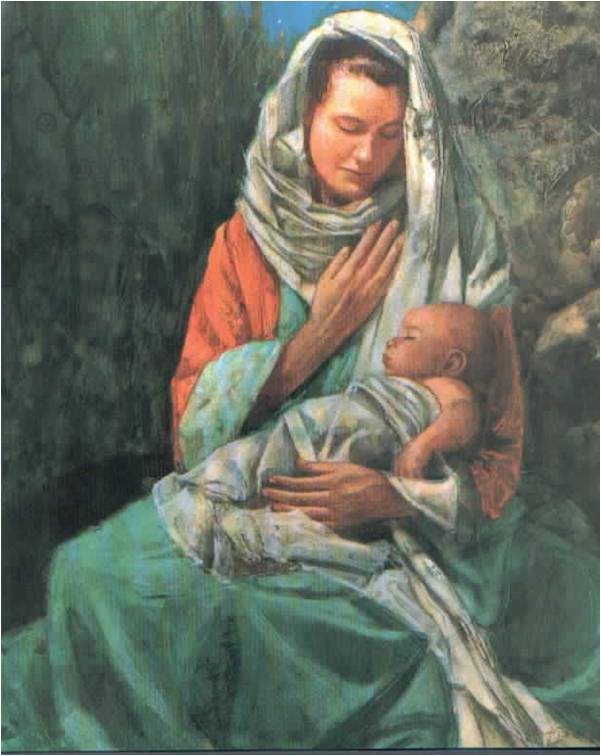
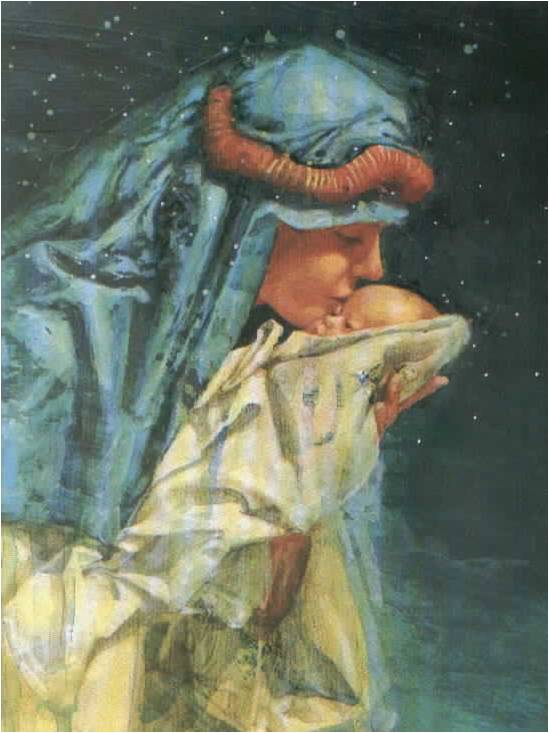
The name of Jesus has deep meaning and profound significance for the whole world. When Mary was pregnant she and Joseph didn’t bop over to the bookstore to find the latest faddish name. The name of Jesus was chosen by God (Matthew 1:21) because it represents grace, love, forgiveness, faith, hope, salvation, and eternal life. Jesus fulfilled prophesies (Isaiah 9:6-7; Matthew 1:22-23). It is through the name of Jesus we have life (John 20:31) and our sins can be forgiven (Acts 2:38). Only through that name can we be saved (Acts 4:12)! And one day every knee will bow to that name (Philippines 2:10)!

Another nice thing about Jesus is that he knows our names. (Isaiah 43:1) Not only does he know our names, but he knows everything about us….and loves us anyway. So what’s in a name? Quite a lot if that name is Jesus.

Posted in Uncategorized | Leave a comment

If God Should Go on Strike

On StrikeOrdinarily I wouldn’t run two poems so close together, but this one ties in so well with my series on fairness that I thought I’d run it this week. Enjoy!


If God Should Go on Strike

From the book:  Homespun Gospel, The Poetry of Walt Huntley

How is it that God above
Has never gone on strike
Because He was not treated fair
In things He didn’t like.

If only once He’d given up,
And said, “That’s it, I’m through!
I’ve had enough of those on Earth,
So this is what I’ll do;

I’ll give my orders to the Sun –
‘Cut off the heat supply!’
And tell the moon, ‘Give no more light
And run the ocean dry.’

Then just to make things really tough
And put the pressure on,
Turn off the vital oxygen
Till every breath is gone!”

You know, He would be justified
If fairness was the game.
For no one has been more abused
Or met with more disdain

Than God, and yet He carries on,
Supplying you and me
With all the favors of His grace
And everything for free.

Men say they want a better deal
And so on strike they go.
But what a deal we’ve given God
To whom all things we owe.

We don’t care whom we hurt
To gain the things we like;
But what a mess we’d all be in
If God should go on strike.

Posted in Uncategorized | Leave a comment

Is God Fair?

Is God Fair..Is God fair? Probably not – at least not by human standards…

If I had a chocolate cake and eight children who wanted dessert I would probably take great pains to make sure I cut eight pieces of cake precisely the same size so each kid would have the same portion. I know each child would be comparing his/her slice of cake to be sure someone didn’t get a bigger piece. That’s human fairness, but God is not human. God is God. If God had the cake he might make all the pieces different sizes. Maybe we would get the size we want, or maybe not. You see, God is not as interested in us getting the same portions as he is in giving us what he knows we need.

I’m reminded of Matthew 20:1-16. This is the parable about the land owner who hires a group of workers for the day and pays them the going rate for a day’s work, which in those days was twelve hours. Because he needed to harvest his grapes that day he kept hiring more workers throughout the day. He even hired some at the last hour of the day, the eleventh hour. However he paid all the workers for a full day’s work.  Well naturally those who had worked for twelve hours were a little upset that those who only worked for one hour got the same pay. I must admit that from a human perspective I would probably be griping right along with those who felt underpaid.

Humans judge fairness by comparing with one another. We say things like, “He’s got more than me and that ain’t fair?” In this passage the workers who labored all day said, “We worked longer, harder, and in the heat of the day yet these guys who came to work for only one hour late in the day got the same pay as us. That ain’t fair!” The problem came when they started comparing what they got paid with what the others got paid. The Bible says it’s not wise to compare. (2 Corinthians 10:12)

Of course, this is not a true story. It’s a parable, an illustration Jesus used to help the disciples understand a principle. It starts with “the kingdom of Heaven is like…” The landowner represents God and the workers represent us. At the end of the story the landowner (God) basically says, “I did you no wrong. I paid you what you agreed to work for. It’s my land. It’s my money! I can do what I want with it.”

Here’s something to always remember – God is God and we are not. His thoughts are not our thoughts. (Isaiah 55:8) God has reasons for what he does, but he doesn’t always share those reasons with us. Our values and God’s are not always the same. We may value the wages, the money. Perhaps God values the harvest, the fruits of our labor, and what we learn spiritually.

This parable illustrates the Christian journey. Some of us become Christians early in our lives and some become Christians later in life, during the last hour. Are we who’ve followed Christ longer bummed out because the eleventh hour Christian receives the same reward? By human standards it doesn’t seem fair. But God is not human. God is God. God will have mercy on whomever he will have mercy. (Romans 9:14-16) It’s not a matter of fairness. It’s a matter of trusting a God of love.

Posted in Uncategorized | Leave a comment

Why?

Why

Why?
By Barbara Dahlgren

We go through life asking why.
Why did my loved one have to die?
Why did they choose my house to rob?
Why did I have to lose my job?

Why did the Stock Market take my money?
Why must it rain and not be sunny?
Why do I have to be so ill?
Why must I climb up this hill?

Why does this road seem so long?
Why is everything going wrong?
We ask these questions up to heaven.
We ask but then no answer’s given.

We ask it all but we ask amiss.
The question we should ask is this:
Who made day and who made night?
Who can give the blind man sight?

Who made the mountains and the sea?
Who has a plan just for me?
Who made heaven and the earth?
Who died so I might have worth?

Who holds my life in His hand?
Who carries me in the sand?
Who knows what’s best for me?
The answer’s simple. It is He!

When the way seems too rough for you,
Don’t focus on why, just focus on WHO!

Posted in Uncategorized | Leave a comment

Blaming God

Blaming GodSome things that happen in life are not easy to understand. It’s disconcerting when bad things happen to good people and puzzling when good things happen to bad people. This does not seem fair. When life is not fair it can be a major source of irritation and frustration for most of us, so naturally we look for someone to blame. When we run out of people to blame we want to blame God.

Some of us are willing to admit that every bad situation is not God’s fault. Sometimes we make poor choices. Sometimes we suffer because of the poor choices of others. And sometimes it’s just time and chance. (Ecclesiastes 9:11). However, many still want to blame God for what he allows to happen. After all, can’t God control everything? Can’t he keep us from screwing up? Can’t he keep someone from screwing us over? Can’t he shield us from every trial of life? Sure he can – but he doesn’t.

Ironically, those people who want to blame God when things go wrong usually aren’t thanking him when things go right. It’s like we want to take the credit, but we like to give God the blame.

Unfortunately, bad stuff happens. We have all experienced things like financial setbacks, the unexpected death of a loved one, severe health problems, a bad marriage, job loss, drug addiction, and so on. Sometimes God intervenes and sometimes he doesn’t. But just because God doesn’t intervene in every unfair circumstance doesn’t mean he doesn’t love us.

The Bible is full of examples of Christians suffering unfairly. Nowhere does the Bible say life is easy. Joseph was thrown in a pit and sold into slavery. Stephen was martyred. Saul repeatedly tried to kill David. Jeremiah was ignored and abused. Jesus was crucified. The list goes on and on.

Life is hard, but the Christian has something other people don’t have in their hardships – God! God never promised life would be easy, but he did promise to be with us every step of the way. He promised he’d never leave or forsake us. He promised we’d never be alone. He promised his peace, comfort, and strength.

Instead of blaming God perhaps we could take a different approach. What about trusting God? We can trust God to be with us. We can trust God to do what’s best overall – not just for us. (Romans 8:28) In fact when those bad things happen is the time we need to hold our faith tightly. We need to trust even more.

Book of Job

The book of Job is a life lesson about bad things happening to good people. In fact Job could be the poster boy for that scenario. Righteous Job lost everything – his health, his family, his fortune. Job was afflicted. Job suffered. Job is trying to make sense out of all of it. So Job is sort of questioning God about it. Why? Why? Why? Haven’t I done everything you wanted? Why are these things happening to me?

Guess what? God neither explains nor defends what is happening to Job. However, God does answer a more significant question Job failed to ask. Who??? Who laid the foundations of the earth? Who is the creator? Who has divine wisdom? Who is omnipotent? The list goes on and on. (Job 38-41) Job never finds out why, but he does find out who – and ends up with more faith, confidence and trust in God!

Here’s the deal…. God is God. Either we have faith in him, or we don’t. God does not need to explain his actions to us. God does not need to apologize for what he does. God does not need to cower in a corner for not intervening when we thought he should. If the Lord gives and the Lord takes away, do we still bless the Lord? (Job 1:21) We should, because we need to remember who God is. God is love – and he loves us.

Posted in Uncategorized | Leave a comment

Is Life Fair?

It's Not FairIt starts when we are young, usually with brothers and sisters. We see that Susie’s toy is bigger. Johnny pushes to the front so he can always be first. Janie puts extra sprinkles on her ice cream. When we grumble about these injustices to our parents, they encourage all of us to take turns, share the toys, and give an equal amount of sprinkles to everyone. They want us to learn to play fair and be fair.

As we grow up the majority of us strive to be fair. There is nothing wrong with that. However it doesn’t take long to learn life is not fair. It’s not fair when we study non-stop to maintain a B average but the guy who plays video games all day long makes all A’s. It’s not fair when we work harder than the guy sitting next to us but he gets the promotion. It’s not fair when we do all the work and someone else takes the credit. Life is not fair.

If life were fair we would all have the same gifts and talents, but we don’t. If life were fair we would all be rich, beautiful, and healthy, but we aren’t. While it’s true some people have worked hard for these things, others have just lucked out. Some people are born with tremendous advantages; some are born with overwhelming disadvantages. Is that fair?

No it’s not, but that’s the way it is. Solomon told us long ago that life is not fair. He explained that the fastest runner does not always win the race; the strongest soldier does not always win the battle; wise people don’t always get the food; smart people don’t always get the wealth; educated people don’t always get the praise they deserve. Unfortunately, bad things can happen to anyone! (Ecclesiastes 9:11)

Life is not fair. Life is not easy. So what can we do about it? We can grumble, blame others, become bitter, stay depressed, and be miserable. Those are viable options but won’t make a person’s situation any better.

Solomon also tells us in Ecclesiastes 9:10 “Whatever your hand finds to do, do it with all your might.” This tells me that although life is not fair we still have choices. We can put our energy into making the best of bad situations, trying to improve our circumstances, and striving to go forward. We can either be bitter or better. We can stay angry or have peace. Problems are a given in life, but misery is optional.

The only way to have this peace is to focus on Jesus. Was it fair for Paul to have all sorts of difficulties when he was doing God’s work? I don’t think so. Yet, he chose the higher ground. Instead of grumbling he said, “We are hard pressed but not crushed. We are perplexed but not in despair. We are persecuted but not forsaken. We are struck down but not destroyed.” (2 Corinthians 4:1-12) He just picked himself up and went about his heavenly Father’s business.

Is life fair? No! Life is not fair but how we deal with it can make a big difference in how we fare in life.

Posted in Uncategorized | Leave a comment

How Does God Speak to Us

Can You Hear His VoiceGod did speak directly to a few in the Bible, but considering the thousands of years of human history, these events were few and not always pleasant.  Moses had to lead the complaining Israelites (Exodus 3:14), Hosea had to marrying a woman of ill repute (Hosea 1:1), Job found out how insignificant he was (Job 40:1), and Paul was struck blind (Acts 22).   God may speak audibly to some today, but if history repeats itself (and it does), this would be the exception, not the rule.  And it doesn’t happen as often as people would have you believe.   

However, God is the great communicator and at no time in history has he remained silent.  He speaks to us just as he always has – through…

  1. His Word – The Bible is written for our instruction, training, correction, and edification. (2 Timothy 3:16,17)
  2. Creation – We see God’s greatness in his creation.  (Romans 1:20) 
  3. Events – Through trials God may be saying, “Learn patience.”  Through celebrations he may be saying, “Do not forget me in the good times.”  (James 1:2-5)
  4. Prayer – Prayer is two-way communication.  We ask and God answers.  (James 1:5)  However God does not always give us the answer we want to hear.    
  5. Our Conscience – Sometimes an inner voice tells us not to do something.  (1 Peter 3:16)
  6. Meditation – Slow down.  Be still so you can hear God.   (Psalm 46:10)
  7. Others – Friends can be closer than family at times and a wise man seeks counsel before making decisions.  (Proverbs 18:24; Proverbs 11:14) 
  8. And so on…

Sometimes we are so intent in looking for a special sign or revelation that we miss what God says to us daily.  The magnificent becomes mundane so we don’t hear what God says through a vibrant sunset, a child’s laughter, a new born baby, ripples in a brook, a field of flowers, a hug from your spouse, a cautious admonition from a close friend, or a scripture we’ve read a hundred times that finally has profound meaning. 

God doesn’t always tell us what we want to hear, but he always tells us what is best for us. What he says will always draw us closer into a relationship with him.

God's Voice vs. Satan's Voice  


Posted in Uncategorized | Leave a comment

Recognizing God’s Voice

The Shepherd's VoiceHow can we recognize God’s voice?  John 8:47 tells us that if we are of God we hear his voice.   As God’s sheep we should be able to recognize his voice (John 10:4-5).  We cannot recognize the voice of one we are not close to.  Therefore we need to build a relationship with God through prayer and bible study:  praying to align ourselves to God’s will and studying to become more like Jesus. We want the very mind of Christ, his wisdom and understanding living in us.  If we have that, we will be able to recognize his voice.  We know God will only tell us to do things based on principles of loving him and our neighbor.     

God’s voice will not tell us to do anything contrary to the biblical principles he has set in motion.  He expects us to be able to discern what those are.   Galileo said, “I do not feel obliged to believe that the same God who has endowed us with sense, reason, and intellect has intended us to forgo their use.”  So think before you say God tells you to…  

  • …do anything that doesn’t align with scripture.
  • …cause dissonance in a church.
  • …do anything that doesn’t draw you closer to him
  • …get revenge.
  • …snipe people from a tall building.
  • …do anything not based on principles of love.
  • … and so on…Why Can't I Hear God

Most of us are far too busy to build a relationship with God, but it is only through constant contact with him that we learn to recognize and hear his voice.  As we learn to pray, drink in of God’s word, and meditate on what it means for us personally we become more attuned to what God says.  Building a relationship means staying in constant contact with God through prayer, studying his word, and meditating on how to apply it in our lives.  Here is where we learn to hear and recognize God’s voice.   


Posted in Uncategorized | Leave a comment