Choose to Start Your Day with God

Another Year of Choices

By Barbara Dahlgren

Good Morning - free from pixabay.com

I’m a big believer in starting the day with God. Some mornings I start by saying, “Good morning, Lord!” Other mornings I say, “Good Lord! It’s morning!” Yes… I know it’s an old joke… but quite frankly, I can honestly say that’s how I feel.

One year my writer’s conference roommate was amazing! It didn’t matter what time we went to bed, she got up each morning dedicated to getting at least an hour of prayer and another hour of Bible study done before starting her day. Four or five or six o’clock! It didn’t matter. I’ve gotten to know this woman fairly well and this is still her normal routine. She’s very consistent – no matter where she is in the world, no matter what her daily schedule holds, no matter what! She’s truly an extraordinary person whom I admire greatly. I almost felt guilty telling her not to worry about the light shining in my eyes when she got up… I could sleep through anything.

Now don’t get me wrong! I really am a big believer in starting my day with God. Time with God in the morning gives us strength to complete daily tasks, brings us peace in the midst of the normal worries we face, and keeps us focused on God instead of little irritants we tend to blow out of proportion. It helps us to hold our tempers and speak words of kindness to others. So I strive for extended prayer and study time in the morning.

And although I strive for it, I don’t always succeed. Sometimes my spirit it willing, but my flesh is weak. At least, that’s my biblical excuse and I’m sticking to it. (Matthew 26:41) Perhaps you can identify!

However, all is not lost! There’s no need to think our day is doomed. We can still be consistent in, at the very least, acknowledging God first thing when we wake up – even while we are still in bed. It’s amazing what a quick little, “Thank You, Lord, for that great night’s sleep” can do to make us mindful of God’s presence all around us. If we didn’t sleep very well we might say something like, “I didn’t sleep well last night, Lord, so I’m going to need a little help to make it through the day. I still know this is the day you made, so help me rejoice and be glad in it.” If we oversleep we might say, “Wow! Look at the time. Thank You, Lord, for that extra sleep. Now please help me get moving and stay focused on You!” We can invite God to have a cup of coffee with us. We can talk to Him on the way to work in the car. We can let Him know we love Him and thank Him for His unconditional love towards us.

Consider this… We don’t start the day communing with God because He requires it or because He will be displeased with us if we don’t. Starting the morning with God is a little gift we give ourselves. It sets the tone for the day and keeps us focused on the spiritual, not the physical. We should want each day to be sanctified, set apart for God’s purpose. It’s doubtful that can happen without starting the day with Him.
This is the day...from churchart subscription

Suggestions for practicing this choice…

When you get up each morning say, “This is the day the Lord has made. I will rejoice and be glad in it!” (Psalm 118:24)

Start each day thinking about all the wonderful things God has done for you instead of all the things you are worried about.

Make a date with God to spend time with Him every morning and strive to keep it. If you fall short, don’t give up and don’t get discouraged! Don’t let discouragement rob you of this special time with God.

Commit to reading a verse of Scripture each morning – maybe before you even get out of bed. Yes, it would better to read a whole passage and that’s what we should work toward. However, if time won’t permit you can still read a verse and meditate on it while you are getting ready for the day. Psalms or Proverbs is a great place to start.

Each morning, tell yourself that yesterday is gone and today is full of new possibilities. Today is the first day of the rest of your life!

 

Posted in Uncategorized | Leave a comment

Choose to Behold Real Beauty

Another Year of Choices

By Barbara Dahlgren 


Beauty - www.publicdomainpictures.net

If beauty is truly in the eye of the beholder, what do I see when I “behold” myself in the mirror? Usually I see an older, slightly overweight, flawed individual whose gray roots are badly in need of a touch up. Most of us feel we fall short because we live in an airbrushed society obsessed with physical beauty. It’s bound to influence how we look at ourselves and how we look at others.

If we try to set a guy friend up on a blind date, the first thing he might ask is, “What does she look like?” We might say, “She’s nice, intelligent, well groomed, has a sense of humor, and just won the Nobel Peace Prize,” but he would probably still say, “Sure, but what does she look like?” Let’s face it, magazines don’t run issues of the 50 wittiest people in the world; it’s always the 50 sexiest men or 50 most beautiful women.

It’s true that beauty is subjective. Different people have various ideas about what they consider beautiful, for beauty is truly in the eye of the beholder. Unfortunately, most of us “beholders” have been bombarded with digitally enhanced images through television, movies, and magazines. Media has determined what is beautiful and we have subliminally been programmed to buy their idea of beauty. To them the phrase “inner beauty” is just another way of saying “uggglllyyy!”

Although difficult, we need to think of beauty the same way God does. Nowhere do we see God using outward appearance to determine someone’s beauty. In fact, he cautions us against using such criteria for judging another’s worth. When God’s prophet Samuel was looking for the next king of Israel among the sons of Jesse, he thought he’d found the right one. Eliab must have been a tall, handsome hunk – what everyone thought a king should look like. So much so that when Samuel gazed on Eliab’s “hunkiness” he said, “Surely the Lord’s anointed stands here before the Lord.” (1 Samuel 16:6)

However, God had other ideas because He said, “Do not consider his appearance or his height, for I have rejected him.” (1 Samuel 16:7) In other words, it didn’t matter if Eliab was one the 50 hunkiest men in the world and looked like he should be a king; God was looking for something else which he finally found in Eliab’s kid brother David – a lowly shepherd.

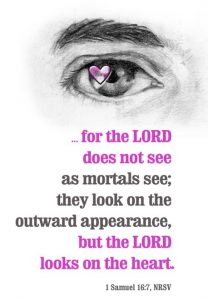
God went on to say, “The Lord does not look at the things man looks at. Man looks at the outward appearance, but the Lord looks at the heart.” Try telling that to People Magazine!

Perhaps we should start beholding beauty the same way God does. He’s not looking at a person’s shiny blonde hair, blemish free skin, slim hips, and new Prada shoes. He finds a heart full of the fruit of His Spirit more appealing. (Galatians 5:22-23)

When we look for the beauty in others, do we look for love, joy, peace, patience, kindness, goodness, faithfulness, gentleness, and self-control?

Consider this… When God beholds beauty He doesn’t look for something that is “skin-deep.” He goes much deeper – into a person’s very heart.

Helen Keller said, “The best and most beautiful things in the world cannot be seen…they must be felt with the heart.” Great perception, don’t you think? Especially, since it came from a blind woman who knew how to behold the beauty all around her.

Eye of the Beholder - The Lord looks at heart - www.churchart.com subscription


Suggestions for practicing this choice…

God says, “Charm is deceitful and beauty is passing…” (Proverbs 31:30) Fashions go out of style and external beauty fades but godly character remains. Ask God to help you not judge others based on outward appearance.

Look for the hidden beauty in even the most difficult person. Mother Teresa said, “There is more hunger for love and appreciation in this world than for bread.”

Don’t put down those who don’t have the same idea of outward “beauty” as you do. I’m still trying to figure out why Leonardo da Vinci’s Mona Lisa is considered so beautiful. Mona doesn’t do it for me, but Leo must have seen something there I missed. When others look at us they might not see much, but God considers us a masterpiece. (Ephesians 2:10 NLT)

Ask God to help you to view others as He views them – a child of God.

Ask God to help you view yourself as He views you – His child whom He loves.

Posted in Uncategorized | Leave a comment

Choose to Think About What You Sow

Another Year of Choices

By Barbara Dahlgren

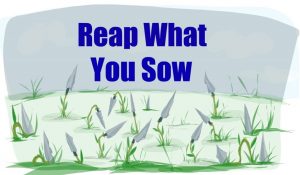
Reap What You Sow - Ribbet design with photo free from www.sketchport.com

Since our past, present, and future sins have all been forgiven, some Christians think they can get away with sin. After all, when God forgives He “remembers our sins no more…” (Hebrews 8:12; 10: 17). That is true, but although God forgives, He doesn’t magically wipe out the consequences of our actions. He has set a law in motion called cause and effect. In biblical terminology it means we reap what we sow.

“Be not deceived; God is not mocked: for whatsoever a man sows, that shall he also reap. For he that sows to his flesh shall of the flesh reap corruption; but he that sows to the Spirit shall of the Spirit reap life everlasting.” (Galatians 6:7-9)

We may choose to ignore this fact, but in our hearts we know it’s true. While reaping and sowing are agricultural terms, a more modern way to say it might be…

  • What goes around comes around.
  • Things come back to haunt you.
  • Your sins will find you out. (Numbers 32:33)
  • You play; you pay.

Some may put off participating in a relationship with Christ feeling they want time to “sow their wild oats.” After all, won’t God forgive us? Yes, He will. He will forgive us for our sins, but there is an aftermath. Sin is like driving a nail through your hand. Forgiveness pulls the nail out and allows healing, but it doesn’t take away the pain or the scar that remains.

As the old saying goes: Sin will take you farther than you want to go, cost you more than you want to pay, and keep you longer than you want to stay,

The reaping what you sow principle applies in every aspect of our lives. Abusing our bodies shortens our lifespan. Going against our conscience leaves the mind dull, impacting our ability to make wise decisions. Repeatedly losing self-control results in anger, envy, outbursts, cruelty, and so on. Constantly giving into what we know is wrong results in developing bad habits that become a part of who we are. These type of actions hinder us from living the full and abundant life God desires for us.

Consider this… Many think God sits in heaven looking for sinners to zap with an electrical shock. He doesn’t have to do that. Sin carries its own penalty, without extra help from God. It’s like drinking slow poison. Eventually it all catches up with us. In the end, no one gets away with sin. Not because of a vengeful God, but because we reap what we sow.

What goes around, comes around... Ribbet designed with Arrow Circle free from pixabay.com


Suggestions for practicing this choice…

Do not view God as a vengeful God, out to get you. God loves us and wants to help us stop hurting ourselves.

Make a list of seeds you personally need to stop sowing. Are you sowing anger, lust, greed, hate, strife, resentment, discontent, etc.?

Sow good seeds to reap a good harvest – seeds like love and kindness. Make a list of five things you can do today to show kindness to others and do them.

Stop doing stupid stuff! Realize everything you do doesn’t just affect you, but those around you. Every time you say, “I probably shouldn’t do this” then guess what? You probably shouldn’t do it – so don’t do it!

Live your life as if everyone can see what you are doing, because in this day and age, almost everyone can see what you are doing.

Posted in Uncategorized | Leave a comment

Choose to Be of Good Cheer

Another Year of Choices

By Barbara Dahlgren

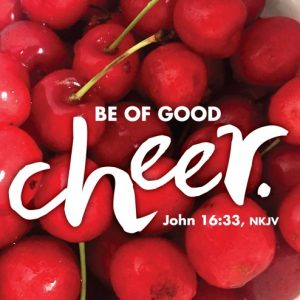
Be of Good Cheer - www.churchart.com subscription

Jesus told people to be of good cheer – sometimes in the direst of circumstances. The life lesson is that although on the surface it may not look like we have anything to be cheerful about, maybe we do.

Jesus told a paralytic, “Be of good cheer!” Why? “…because your sins are forgiven.” (Matthew 9:2) We have God’s forgiveness and pardon.

Jesus told His disciples who thought He was a ghost walking on the water, “Be of good cheer!” Why? “…[Because] it is I; do not be afraid.” (Matthew 14:27) We have Christ’s presence so we have nothing to fear.

Jesus told His disciples, “Be of good cheer!” Why? “…[Because] I have overcome the world.” (John 16:33) Jesus said that because He has overcome the world, we can have peace in the midst of trouble.

So no matter what we are going through, we always have Christ’s pardon, presence, and peace. That may not make us feel like laughing, but it should at least make us smile. Even during hard times, we should be able to muster a faint smile – and there simply is no excuse for not smiling when things are going well in our lives.

What better way to show we are Christians than by smiling? Studies show that even forced smiles have a positive effect on the people smiling and those around them. Smiling is a universal language everyone understands. Smiles are contagious. Smiles are proven to reduce stress and anxiety, release endorphins, and strengthen the immune system.

I’m not saying we need to grin like idiots all the time, but William Barclay said, “A gloomy Christian is a contradiction of terms.” At times Christians might be sad or somber, but they should never be gloomy. Gloomy means having nothing to look forward to and a pessimistic outlook on life. Think of Eeyore from Winnie the Pooh who says, “Sure the sun is shining now, but I’m sure it will rain.” Or when someone said, “Good morning,” Eeyore replied with, “If it is a good morning, which I doubt.” Unfortunately, I’ve known some Christians like that!

Consider this… Paul said that Christians can be sorrowful, yet still rejoice. (2 Corinthians 6:10) If we truly understand and appreciate Christ’s pardon, presence, and peace, we can smile! Jesus said to be of good cheer. I don’t think He meant it as a suggestion.


Smiley Face - free from pixabay.com

Ideas for practicing this choice…

Each day you wake up, force yourself to smile. It helps set your mood for the day.

Before you answer the phone, smile. It will make a difference in your voice tone.

For one day, draw a smiley face on the back of your hand and every time you look at it force yourself to smile. (I recommend ink, which will come off with rubbing alcohol. If you use permanent marker you may be smiling for a month. Although worse things could happen.)

Force yourself to smile a little at people you meet throughout the day. Don’t overdo it or they’ll think you are up to something.

If you feel yourself getting gloomy whisper, “I have Christ’s pardon, presence, and peace.” Then smile and say, “Thank you, Lord!”


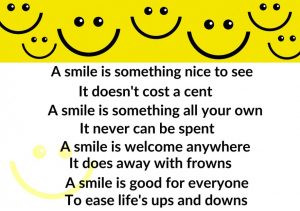
Smile Poem - made at Ribbet with www.publicdomain.com background

Posted in Uncategorized | Leave a comment

Choose to Boldly Approach the Throne

Another Year of Choices

By Barbara Dahlgren

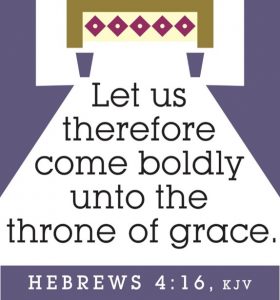
Come boldly to the throne of grace...Hebreews 4.16 - www.churchart.com subscription

Hebrews 4:16 says, “Let us therefore come boldly to the throne of grace…”

Years ago I heard a sermon about this verse. The preacher wasn’t totally advocating a “name it and claim it,” “blab it and grab it,” or “health and wealth” gospel, but he did give the impression we should boldly ask God for what we want and if it’s good for us, good for everyone around us, and just plain good – God will give it to us.

Well, that’s what I did… and guess what? God didn’t give me what I wanted. Imagine my disappointment! My faith was a bit shaken because I felt like I was taking a giant leap of faith to make a request boldly. I also felt like my lack of faith prevented me from getting it.

Is our faith a bit wobbly when God doesn’t give us what we want – when clearly we know it would be the best for everyone concerned?

Ah…but do we really know what is the best for everyone? We may think we do, but maybe we don’t. God sees all and knows all. Only He knows what is best for everyone! Is it our lack of faith that prevents a request, or God’s faithfulness to doing what is best that makes the difference?

So what does it mean to come boldly before the throne of grace?

Actually this passage isn’t about our boldness per se – at least not the kind of boldness we associate with this word – like being brash, brave, daring, etc. The whole passage is letting us know we can have an intimate relationship with Jesus Christ, our High Priest. We have direct access to Jesus Christ! We don’t need to go through another person – a priest, a minister, a guru, a psychic, or an angel to get to God. This direct access thing is a big deal and was not really possible for the common man before the death of Christ.

In Old Testament times, the High Priest was the mediator between God and the people. Only he could enter the Holy of Holies in the temple. (Hebrews 9:7) The Holy of Holies was a special place, considered the earthly dwelling place for God’s presence.  A veil or thick curtain divided it from the rest of the temple, where man could dwell.

However, when Jesus died for our sins, that veil or curtain was miraculously “rent” or torn from top to bottom. (Matthew 27:50-51) God no longer dwells in temples made of hands. (Acts 17:24) The way to God the Father is not through the temple, but through Christ His Son, because Jesus is now our High Priest. (Hebrews 10:19-22)

And Jesus, our High Priest, came to earth, lived among us, and totally understands everything we go through. (Hebrews 4:14-16) He feels our pain. He knows our weaknesses and temptations. So when we talk to Him, He “gets” us! He understands us. He knows where we are coming from. Therefore, we can come “boldly” before Him.

The Greek word for boldly here is “parrhesia” and it means to be frank, outspoken, and even blunt. We can tell Jesus exactly how we feel. It’s not about making bold requests we want God to fulfill like some big sugar daddy in the sky. It’s about being honest without fear of reprisal. It’s about pouring our hearts out to the One who understands and having confidence in Him to do the best thing for us. We come boldly to Him so we can obtain mercy and find grace to help us in our time of need. (Hebrews 4:16)

Consider this… We don’t have to worry that we are praying in the wrong way, at the wrong time, with the wrong stance, etc. We have a High Priest who looks beyond all that to our hearts. God doesn’t want to punish us; He wants us to realize how much He loves us! You see, it’s not our faith or lack of faith that makes the difference in our prayers; it’s God’s faithfulness!

You want better answers... www.churchart.com subscription

Suggestions for practicing this choice…

Talk to God all day long. Tell Him honestly how you feel. If you are happy say, “Lord, I’m so happy! Thank you for your blessings!” If you are sad say, “Lord, I’m so sad. Please give me yourcomfort.” If you are confused say, “Lord, I’m so confused. Help me to see your will in this mess.” If you are angry say, “Lord, I’m so mad. Please help me not to say something I’ll regret.” Get the idea????

Ask God to help you trust and have confidence in Him.

Pray for God’s will to be done, not yours.

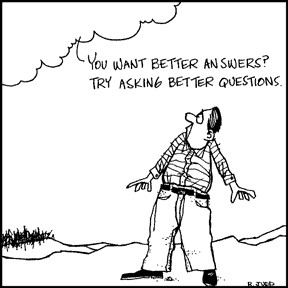
James 4:3 tells us, “You ask and do not receive, because you ask amiss, that you may spend it on your pleasures.” If you want better answers from God, try asking better questions.

Repeat or sing this often throughout the day: Jesus loves me this I know…


Posted in Uncategorized | Leave a comment

Choose to Remember Who You Are

Another Year of Choices

By Barbara Dahlgren

Who Am I Really - www.emaze.com - free google advanced searchOnce Jesus asked his disciples, “Whom do men say that I am?” Some said he was John the Baptist, some said Elias, some said a prophet and so on. Jesus was no doubt curious.

When Jesus asked Peter, he replied, “You are Christ, the son of the living God.” (Matthew 16:13-17) It pleased Jesus that Peter realized this. After all, Christ knew who He was even if those He came in contact with weren’t quite sure.

How about us? Do we know who we are?

New Creation - www.churchart.com subscription

Once we turn our lives over to God, we belong to Him. And from that very moment our identity changes and we become new people. (2 Corinthians 5:17, Ephesians 4:24) Sometimes just knowing who we are can make a difference in how we live our lives. Here is just a sampling of who we are:

  • We are God’s children (John 1:12, Gal. 4:7)
  • We are loved. (John 3:16, Col. 3:12)
  • We are Jesus’ friends. (John 15:15)
  • We are accepted. (Romans 15:7)
  • We are chosen. (Eph. 1:4, Col. 3:12, 1 Thess. 1:4)
  • We are redeemed. (Ephesians 1:7)
  • We are justified. (Romans 3:24)
  • We are saved, not condemned. (Romans 8:1)
  • We are free, not slaves. (Rom. 6:6, Rom. 8:2, Gal. 4:7, Gal. 5:1)
  • We are heirs. (Rom. 8:17, Gal. 4:7, Eph. 1:11)
  • We are dwelling places for the Holy Spirit. (1 Cor. 6:19)
  • We are led by God. (2 Cor. 2:14)
  • We are righteous. (2 Cor. 2:15, 2 Cor. 5:21)
  • We are blessed. (Ephesians 1:3)
  • We are alive in Christ. (Ephesians 1:4-5)
  • We are complete in Christ. (Col. 2:10)

Our identity is now in Christ. All these attributes are who we are in Christ, not earned by us but freely given.

Consider this… The Bible says as a man thinks, so he is. (Proverbs 23:7) How we perceive ourselves makes a difference in how we act, how we react, and how we live.

So who do you think you are? We can’t afford to get caught up in who others might think we are.  We have an abundant life and rich inheritance. After all, we are God’s children!

Suggestions on practicing this choice…

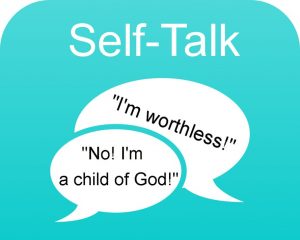
Self Talk - Toktoship Talk icon - commons.wikimedia.org

What we say to ourselves (self-talk) has a major impact on how we view ourselves, how we function, and how we come across to others. Let’s not bombard ourselves with negative put downs like: Nobody loves me; I’m stupid; I’m fat; I’m worthless; I’m ugly; I can’t do anything right; I’m a jerk! Okay, we may be a jerks at times, but we are probably not stupid, fat, worthless, ugly jerks who can’t do anything right. Besides God always loves us – ALWAYS! Give yourself a break!

Replace negative thoughts with positive, truthful thoughts like: Jesus accepts me; Jesus does not condemn me for my mistakes. Others may think we’re jerks, but Jesus loves us. (Actually Jesus may think you’re a jerk, but guess what? He still loves you and will definitely help you be less of a jerk if you ask Him.) Whatever is true and positive – think on these things. (Philippians 4:8)

View God as a loving Father with open arms, always ready to embrace you.

Focus on spiritual things. Fill your mind with prayer, God’s Word, and meditation.

Say to yourself often throughout the day: “I am a child of God! My identity is in Christ.” And pray to yourself often throughout the day: “Lord, help me to reflect this identity in the little things I do and say each day.”


Posted in Uncategorized | Leave a comment

Choose to Look Beyond What You Can See

Another Year of Choices

By Barbara Dahlgren
Magic - google advanced free searchMy mom used to say, “Don’t believe anything you hear and only half of what you see.” When you are young, such sayings don’t make much sense. As you age, you begin to understand.

We all know not to believe much of what we hear. Inaccurate gossip and rumors run rampant. But that seeing part is a little more difficult. Can’t we trust our own eyes? Maybe not. I once attended a magic show in Vegas where a tiger disappeared before my very eyes. Now I know that tiger didn’t just vaporize or become invisible – yet to the naked eye it disappeared. Which reinforces the concept that we can’t always believe what we see.

Now You See Me - commons.widimedia.org

This year I saw the movie Now You See Me 2, a sequel to Now You See Me which came out in 2013. It’s a crime mystery about a team of illusionists who pull off bank heists, taking money from corrupt rich guys during their performances and giving it to their audiences. It has a good story line, but what I liked most was the way it showed some tricks of the magic trade – how magicians can convince others that it’s all magic when it’s actually skillful sleight of hand, misdirection, and suggestion. It’s all an illusion and the world of magic convinces me that we can’t always believe what we see.

Then there is another saying: seeing is believing. In other words, in order to accept something as true, we need to see it with our own eyes. Well, if we can’t believe half of what we see, how could seeing be the same as believing? With spiritual principles, just the opposite is true. When we believe, our eyes are opened and then we can see.

This concept should not surprise Christians who know that God uses contradictory terms all the time. Here are a few examples…

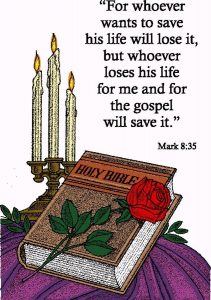
Mark 8.35 - www.churchart.com

  • We must lose our life to gain it.
  • We must give to receive.
  • God is the beginning and the end.
  • Jesus was born of a virgin.
  • We must be born again.
  • The first will be last.
  • There is strength in weakness.

There is much we can’t physically see but we need to believe in. Moses understood this. He forsook Egypt, enduring the wrath of the Pharaoh because he saw God who is invisible. In other words, he knew God was there. Just because we can’t see something doesn’t mean it isn’t there.

Elisha knew this. When the nation of Aram was ready to attack Elisha, his servant saw they were surrounded by horses and chariots. He thought it was just him and Elisha against the world, so he ran to Elisha saying, “What are we going to do?”

Elisha said, “Do not fear. Those that are with us are more than those who surround us.” Then Elisha asked God to open the eyes of his servant – then he saw the mountains were full of God’s horses, an army of angels, and chariots of fire. (2 Kings 6:16-17)

We as Christians cannot afford to just rely on what we can see. That’s what the children of Israel did. They were primarily influenced by what they could see instead of trusting in the invisible, eternal God. They lived an up and down existence because their faith was dependent on their circumstances. When God delivered them, they believed. When discomfort came, they didn’t believe. (Psalm 106:12-15)

Aren’t we a little like that? Christians who are preoccupied with external influences live an inconsistent life. Up one day, down the next. If the sun is shining, they’re happy. If it’s raining, they are said. They are unable to see God in everything.

Consider this… When our belief hinges totally on our sight, on only what we can see – we miss a lot of God’s “magic” in the world around us. We need to look beyond what we can only see with our physical eyes.

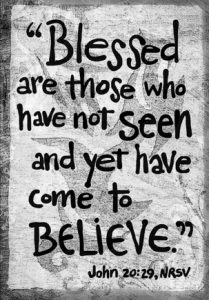
John 20.29 - www.churchart.com

Suggestions for practicing this choice…

Everyone has evidence of God’s existence through the world around them. Creation demands a Creator. (Romans 1:20) Ask God to help you see His hand everywhere, throughout each and every day.

Think about this statement from St. Augustine: “Faith is believing what we do not see, and the reward for this kind of faith is to see what we believe.” Deep stuff!

Ask God to open your eyes to His goodness all around you. Psalm 27:13 says, “I would have despaired unless I had believed that I would see the goodness of God.”

Think about things we can’t see but know are there. We can’t see the wind but we can feel the breeze. (John 3:8) We can’t see gravity but it holds us to the earth. These concepts should help us understand an invisible God a little better.

While it’s true some will only believe when they see, just remember that Jesus told Thomas, “Blessed are those who have not seen and yet have believed.” (John 20:29) Ask God to help you believe.


Posted in Uncategorized | Leave a comment

Choose to Develop Discipline

Another Year of Choices

By Barbara Dahlgren

Discipline - www.flckr.com - photo sharing

In our last blog we discussed self-control, which is a fruit of the Holy Spirit. On the surface it may appear that self-control and discipline are the same thing. However, there are certain nuances of these two traits that can differ.

Self-control usually involves restraint. Most of us need self-control so we don’t mess up our lives, make fools of ourselves, or hurt others. We usually need to stop ourselves. In other words, don’t do it!

James 1.22 - www.churchart.com

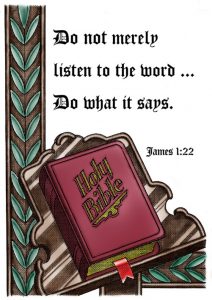
Discipline can involve restraint, but it usually involves action or being pro-active. So being disciplined means to be “doers of the word, not hearers only.” (James 1:22) You might say that while self-control protects us, discipline trains us to do what we need to do. The dictionary says that discipline as a verb actually means to train someone by instruction and practice. This training is vital in the Christian walk.

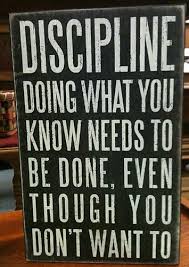
The New Testament speaks about Christians disciplining themselves in forming godly habits. Paul said that mature Christians have “trained themselves to distinguish good from evil.” (Hebrews 5:14 NIV) Timothy was told to train himself in godliness. (1 Timothy 4:7) So this self-discipline is about spiritual training. Spiritual discipline submits our worldly desires to the will of God. We control our bodies and minds to do what they should do, rather than what they would like to do. Discipline is training ourselves to do the right thing when we don’t feel like it.

Discipline Quote - www.flickr.com - photo sharing

We, like Timothy, should be training ourselves to have godly character. John MacArthur wrote, “Godly character is not the result of good intentions, wishful thinking, some mystical zap, or even sheer Bible knowledge. It’s developed through the self-disciplined application of God’s Word at a very basic level, enabled and empowered by God’s Spirit.”

How do we accomplish this? Paul tells us: “Whatever you have learned or received or heard from me, or seen in me – put into practice.” (Philippians 4:9 NIV) Practicing spiritual principles is how we train ourselves. God will not automatically give us good habits. We get good habits by consciously and consistently using what we’ve learned from Christ – in other words, through discipline.

Spiritual disciplines are good habits we practice that bring us closer to God. Remember that God is always with us. He remains constant – the same yesterday, today, and forever. We, on the other hand, have a tendency to drift away from Him. Developing discipline in spiritual areas of our lives keeps us from drifting.

Most Christians today do not like the idea of spiritual training which requires drawing close to God, studying His Word, meditating on how to apply it in our lives, and asking God to guide, direct, and motivate us. They would rather God funnel His godly character into us. Some want to change, but not put any time or effort into the process. They don’t want to participate with what Christ is doing in their lives, they would rather just “be” or just call themselves Christians.

Consider this… We can call ourselves light bulbs, but we won’t shine without turning on the electricity.

Light Bulb - public domain

Suggestions for practicing this choice…

Aristotle said, “We are what we repeatedly do. Excellence then, is not an act, but a habit.” So here’s a little exercise to try for a week. Ask God to help you think of one little habit you would like to inculcate into your life that would draw you closer to Him. Just one!

Ask God to help you make a list of five things you can do each day to build this habit.

At the end of each day write down the things on your list you did. If you did any of them, have a little mini-celebration. Give yourself some credit and praise God.

If you didn’t do any of them, praise God anyway – because He loves you! Then ask Him to help you start the process again tomorrow!

Consider reading one of following books on spiritual disciplines…

  • Invitation to the Jesus Life by Jan Johnson: Johnson feels that we must know Christ if we want to live like Christ. This book has seventeen characteristics displayed by Christ’s life.
  • The Life You Always Wanted by John Ortberg: Ortberg offers a biblical perspective on the ancient practice of spiritual disciplines.
  • Spiritual Disciplines Handbook – Practices that Transform Us by Adele Ahlberg Calhoun: This practical guide has more than sixty different spiritual disciplines for readers to implement in their lives.
  • Celebration of Discipline by Richard Foster: Christianity Today listed this book as one of the top twenty most influential books of the 20th century. Foster explores the outward, inward, and corporate aspects of spiritual disciplines.
  • Sensible Shoes series by Lisa M. Smara: For those who like fiction, these books are about women participating in a spiritual formation group.
Posted in Uncategorized | Leave a comment

Choose to Exercise Self-Control

Another Year of Choices

By Barbara Dahlgren
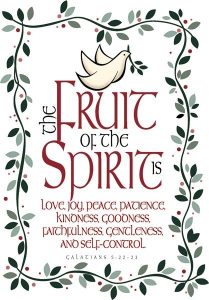
Self Control Thermostat - www.flckr.com - freeSelf-control is a fruit of the Holy Spirit. (Galatians 5:23) The Greek word is “enkrateia” which means not only self-control but self-mastery, self-restraint, and self-governance. Self-control is also used in a list of qualities to be practiced by Christians. (2 Peter 1:5-9) Those failing to practice them are called shortsighted to the point of blindness. So self-control is very valuable in the Christian journey.


Self-control is the ability to live within certain restraints. Even if we are within our rights to do something, sometimes it is not wise to do it. (1 Corinthians 6:12) But generally this is not the area of self-control most of us have problems with. More than likely we fail to resist temptations or excesses that feed into our weaknesses, which leads to making our lives or the lives of those around us miserable.

Some in society would have us be free of all restraints. They want us to do our own thing, look out for number one, and “let it all hang out,” so to speak. More than one person has been caught on social media “letting it all hang out” and, believe me, it has not been a pretty sight.

Today we have a binge mentality. We think if a little is good, a lot is better. We want to binge on food, TV, sex, sports, work, spending, collecting grown-up toys, etc. If people want something that isn’t theirs, they just take it. If people don’t like others or a group’s lifestyle, they send hate mail, persecute, or kill them. All of this is done under the umbrella of self-justification.

The Bible cautions us about lack of self-control…

  • Uncontrolled lust can lead to fornication or adultery. (Proverbs 6:26-32) Paul tells us the body is not for sexual immorality, but for the Lord. (2 Corinthians 6:13)
  • Uncontrolled spending can lead to squandered lives or even poverty. (Proverbs 21:20)
  • Uncontrolled ambition may bring money but not understanding. (Proverbs 23:4)
  • Uncontrolled love of money can lead to trusting riches instead of God. (1 Timothy 6:9-10, 17-19)
  • Uncontrolled drinking leads to doing things we wish we hadn’t done. (Proverbs 23:29-35)
  • Uncontrolled anger will have others view us as foolish. (Proverbs 29:11)
  • Uncontrolled coveting or wanting what we don’t have can lead to wars. (James 4:1-3)
  • Uncontrolled tongues can do irreparable damage to others. (James 3:6-10)

Proverbs 25:28 says, “Whoever has no rule over his own spirit is like a city broken down, without walls.” Building and maintaining walls was pretty important in Old Testament times. Walls were a source of strength and protection. Cities with broken walls had shameful reputations and were easy for others to conquer. Do we see a parallel here with people who lack self-control?

2 Timothy 3:1-5 gives us a long list of what leads to a nation’s downfall. Nestled in the middle of all of them is “without self-control.” When Paul presented the gospel to Felix, a Roman governor, he chose to emphasize righteousness and self-control. (Acts 24:25) Historians think lack of self-control, drunkenness, orgies, and an “anything goes” mentality led to the fall of the Roman Empire.

Titus did not have it easy as a young pastor on the isle of Crete. Crete was well known as the first century party place with residents considered to be liars, evil beasts, and lazy gluttons. (Titus 1:12) So Paul wrote to Titus and encouraged him to teach self-control to his new converts.

  • Teach elders to be men known for their self-control. (Titus 1:8)
  • Teach older men to be sober and temperate. (Titus 2:1)
  • Teach older women to tell the truth, not drink too much wine, be discreet and chaste. (Titus 2:3-5)
  • Teach young men to have integrity, reverence, and be incorruptible. (Titus 2:6-8)
  • Teach bond servants not to answer back or pilfer. (Titus 2:9)
  • Teach all Christians to say, “No!” to ungodliness and worldly passions. (Titus 2:11-14)

In other words, they all needed to learn restraint or self-control – and so do we!

In this Titus passage, Paul also mentions God’s redeeming grace. Well, this same grace that redeems us can reform us if we yield to the God who provides it. Yielding to God is essential because the self-control we are discussing is not human willpower. Godly self-control is power from God that enables us to govern our lives.

Another meaning of the Greek root word “krateia” or “kratos” is strength. The inner strength we need to exercise in “enkrateia” or self-control comes from God. As we draw close to God, He infuses us with that little something extra we need to exercise godly self-control.

Consider this… It would be so much easier if God would just control us as we yield to Him, but that’s not how God works. God will guide us and help us, but He won’t control us. He gives us free moral agency. However, when we yield to God, draw near to Him, and make Him a priority in our lives, He gives us what we need to exercise self-control.

Galatians 5.22-23 - from www.chruchart.com

Suggestions for practicing this choice…

Flee temptation. If someone is looking for a gun fight with you, then get the hell out of Dodge.

Better yet, if you have a certain weakness, don’t go where they will be tested. Don’t go to Baskin Robbins if you can eat a whole ice cream cake by yourself. Don’t go to happy hour for the free snacks if you have a tendency to drink too much. Just – don’t – go – there!!!

Replace your temptations by pursuing righteousness, faith, love, and peace. (2 Timothy 2:22) Counteract wrong desires by submitting to God and drawing near to Him. (James 4:7-9) Ask God for help!

Be kind to everyone but realize who you hang around with makes a difference. (1 Corinthians 15:33) Develop close, personal relationships with the spiritually minded. (Ecclesiastes 4:10)

We are not perfect. We all slip and fall. Realize God loves you… so if you fall – pick yourself up, dust yourself off, and start all over again. Hmmm??? Someone should write a song about that!


Posted in Uncategorized | Leave a comment

Choose to Jubilate

Another Year of Choices

By Barbara DahlgrenFourth of July - public domain

Jubilate is another way to say celebrate a joyful occasion. Believe it or not, God loves to jubilate! He is a God of joy. The scriptures are full of exhortations to rejoice. (Psalm 118:24; Philippians 4:4) The scriptures are full of celebrations. God likes a little singing (Ephesians 5:29, James 5:13), a little dancing (Psalm 149:3; Ecclesiastes 3:4), a little shouting (Isaiah 12:6; Psalm 47:1), and a lot of laughter (Proverbs 17:22; Psalm 126:2). So, I’m sure he delights in Fourth of July festivities.

Proverbs 22:28 says that it’s good to remember historical landmarks and the Fourth of July would certainly qualify. It commemorates our Declaration of Independence from England and the birth of democracy in our great land. This major holiday represents the land of the free and the home of the brave – which are blessings from God.

We are a diverse nation consisting of many cultures. People flock to the United States seeking the “America dream.”  They are drawn to a land froth with opportunities and possibilities because of the freedoms offered. Freedoms many of us who were born here take for granted.

Now everyone jubilates in different ways. Personally, I like to annoy people with obscure facts.  So here’s a little patriotic quiz and some trivia guaranteed to irk or bore your friends and family – my idea of a good time!

What is our National Anthem?

It’s the Star Spangled Banner. Although you have to be an operatic student to be able to sing it and do it justice when you hit “and the rockets’ red glare…” Of course we all chime in when we get to “and the home of the brave.” That’s because we know it’s over so we can take a deep breath and sit down.

What is our National Bird?

It’s the bald eagle. We all know Benjamin Franklin lobbied for the turkey but lost to a more majestic creature. The bald eagle was chosen for its strength, long life, and supposedly during some battle in the Revolutionary War a nest of them awoke, shrieked loudly, and soared overhead.  Fortunately, turkeys don’t soar or we would be having chicken every Thanksgiving.

What is our National Flower?

It’s the rose. In 1986 Congress passed a joint resolution and President Reagan signed a proclamation to make the rose our “national floral emblem.” Poetic justice probably dictates a flower with beauty and thorns was chosen. Freedoms do not come easily.

Obscure Fourth of July Trivia

The following people were born on the Fourth of July: composer Stephen Foster, playwright Neil Simon, advice columnists Ann Landers and Dear Abby, President Calvin Coolidge, author Nathaniel Hawthorne, Yankee Doodle Dandy’s George M. Cohan, and Tom Cruise.

(Actually Tom Cruise was born on July 3 but he did star in the movie Born on the Fourth of July so I thought he deserved an honorable mention.) And let’s not forget Louis Armstrong who celebrated his birthday on July 4 even though he was actually born on August 4. That patriotic little Satchmo!

Three presidents died on July 4: Thomas Jefferson, John Adams, and James Monroe.

On July 4, 1876 Susan B. Anthony read the Declaration of Rights for Women at Freedom Hall in Philadelphia.

On July 4, 1881 Booker T. Washington opened the Tuskegee Institute.

On July 4, 1882 Buffalo Bill opened his Wild West Show and toured the country for 35 years.

On July 4, 1895 America the Beautiful was first printed. (A mighty fine, patriotic song in a singable key, I might mention.)

On July 4, 1884 France gave the Statue of Liberty to the U.S.

And my personal favorite, on July 4, 1778 George Washington helped the nation celebrate by giving double portions of rum to the troops, which in my opinion is a grand way to celebrate a birthday!

July 4th Sampler - from Print Master

Consider this… As we eat barbecue and watch fireworks this year, let’s remember the United States of America is more than a song, a bird, a flower, or trivia to be forgotten. In fact, there is nothing trivial about this great country of ours or what it represents. Dreams! Ideas! Blessings! Freedom!

So Happy Birthday to US! And may God continue to bless America, stand beside her, and guide her…our home, sweet home! (Which is another mighty fine, patriotic, inspirational song in a singable key, I might mention!)


Fireworks - pixabay.com

Suggestions for practicing this choice…

  • We ask God to bless America. He has! Make a list of at least seven blessings we have here that other countries don’t have.
  • John F. Kennedy said, “Ask not what your country can do for you; ask what you can do for your country.” Try to think of ways you can be a better U.S. citizen.
  • Read this passage often and think about the privilege of living in the United States of America. 1 Timothy 2:1-3: “Therefore, I exhort first of all that supplications, prayers, intercessions, and the giving of thanks be made for all men – for kings and all who are in authority, that we may lead a quiet and peaceable life in all godliness and reverence. For this is good and acceptable in the sight of God our Savior.”
  • Display a U.S. flag. There’s nothing wrong with having the right kind of pride in being an American.
  • Think about attending a fireworks presentation. Sure it’s a hassle getting everyone in the car, hauling the folding lawn chairs, finding a good spot, parking, and inching your way in traffic when everyone leaves – but little kids love it. Big kids love it, too! It doesn’t hurt to be a big kid once in a while. All kids love to jubilate!
Posted in Uncategorized | Leave a comment