One More Year of Choices
By Barbara Dahlgren
 Remember the old adage that if we want something done, give it to a busy person. This sounds great, unless we happen to be the busy people getting all that “to do” stuff dumped on us. Let’s talk a little about overcommitting – a subject I happen to know a lot about from personal experience.
Some of us think we can do everything. We think we can fix every situation. We think no one can do it (whatever “it” is) better than us. We overcommit to our jobs, our church, our families, our friends, various organizations, our children’s school, and so on. While these are all worthy causes, they can add hours of work and stress to our already busy lives. In addition to these worthy causes, we still have to do our daily responsibilities such as grocery shop, cook meals, wash and dry laundry, build relationships with our spouse and children, visit ailing parents, pay the bills, walk the dog, and feed the cat.
Did you know that overcommitting can lead to health problems, stress, depression, anxiety, and sleeplessness? Because we can only do so much, we get overwhelmed. We are in danger of a “crash and burn” scenario. Then we are no good to anyone, especially ourselves.
Whose fault is it when we overcommit? Ours! We are not victims; we are the product of our poor choices. We have to make hard decisions about how we use our time and energy. Sometimes it’s difficult to know the difference between a need and a want. If we place needs before wants, we can sometimes weed out a lot of unnecessary commitments.
Some of us overcommit because we don’t know how to say no. We are people pleasers and afraid of disappointing others. Believe it or not, saying no won’t kill us. We can say something like, “No thank you. I’m very flattered that you asked me, but I’m already overcommitted at this time. However, I’ll be sure to pray that you find the right person to do this.” Or if we think we might be able to do it, don’t say yes too quickly. Say, “Can I pray about his, check my calendar, and get back to you?”
Some of us think only we do certain things. Believe it or not, others can do it, too. It may not be done as well as we could do it, but it will get done. And guess what? Not every project needs to be done.
Consider this example in Exodus 18… After Moses led the children of Israel out of Egypt, they still had lots of hardships and problems. Many days all Moses had time to do was sit, listen to people, and make judgments about their situations – from morning to night. When Moses’ father-in-law Jethro saw this, he said, “What are you doing and why are you doing it all alone?”
Moses answered, “When the people have difficulties, they come to me, and I judge between one and another, and make known the statutes of God.”
Jethro basically replied, “Well, this is good, but it’s too much for you. You’re killing yourself, son! Teach these people the statutes, choose men of truth who fear God and place them to be rulers of thousands, hundreds, fifties, and tens. Then only problems they can’t solve will come to you.”
 WOW! What a concept! It was a light bulb moment for Moses and he followed Jethro’s advice. So even Moses, God’s chosen and anointed one, had to learn a lesson about overcommitment.
We can’t do everything we would like to do, so we shouldn’t try. It’s better to do a few things well, than a lot of things mediocre. There is only so much time in a day. We must learn to balance our time and energy. Remember that when we say yes to some things, we have to say no to others.
Suggestions for practicing this choice…
We all have projects we have a heart for. It’s not wrong to concentrate on what we feel called to do. Pray about it and try picking only one thing in this area, not a lot.
Learn to set limits. Eliminate some activities and concentrate on others. Create boundaries and margins.
When asked to take on a responsibility, like chairing a committee or being a ministry leader, ask what the job entails. What would you be expected to do? Whatever they say, plan on it involving at least four times more things than what they are telling you. Consider all this before you say yes.

Prioritize what you become involved in. Make a list of your top priorities. For example: God, spouse, children, grandchildren, church, charity work, relatives, job-related activities, and so on. BTW… don’t confuse church involvement with having a relationship with God. They are two distinctly, different things. When opportunities come up, evaluate where they fit in your list of priorities. This will help you make a decision on whether to say yes or no.
Jesus had something to say about priorities in Matthew 6:33: “Seek first the kingdom of God.” The point of this whole passage is not to ignore our responsibilities, but learn to put first things first. (Matthew 6:25-33)
 We were created to be relational. That’s why solitary confinement in prison is one of the worst punishments. Even when we are antisocial, we will subconsciously respond to others with our “mirror neurons.” This is why smiles, frowns, and yawns are contagious. So our brain may be social, even when we aren’t.
 People are forgetful. Maybe that’s why God was continually exhorting them to remember things He had done, or setting up little monuments to help them remember.
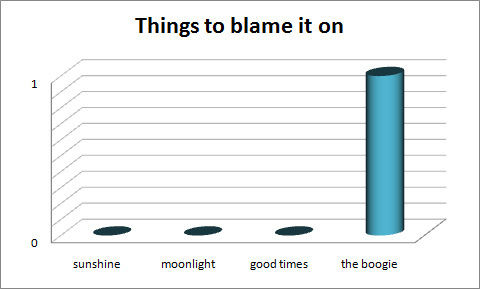 Some of us are willing to admit that every bad situation is not God’s fault. Sometimes we make poor choices. Sometimes we suffer because of the poor choices of others. And sometimes it’s just time and chance. (Ecclesiastes 9:11).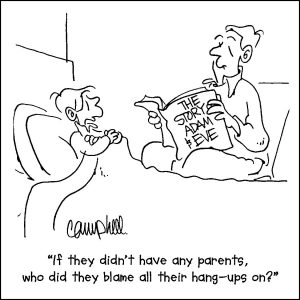
 Is God fair? Probably not – at least not by human standards…

 Guess what? Everyone fails from time to time. Failure is not fatal. Failure is not final. Failure is not the end of the world. We can’t afford for mistakes or set-backs to make us feel like failures. Failure, if not kept in proper perspective, can make us feel like giving up.
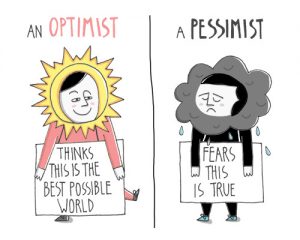
 Last time, we explored the dangers of negative thinking. Those who entertain negative thoughts long enough become pessimists. Pessimists see the worst aspect of everything. They look on the dark side of life. Think of Winnie-the-Pooh’s friend Eeyore. He’s an old, gray stuffed donkey who is always gloomy and depressed. A conversation with Eeyore could go something like this: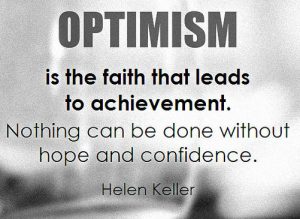
 We live in a “put-down” society – one that is eager to point out our short comings. We are not thin enough, smart enough, or good enough – and probably never will be in the eyes of this world. This negative input gives us a flawed perspective of how we really are. The mind entertains these negative thoughts, plays tricks on us, and sabotages our happiness.