Choose Not to Think Someone’s Salvation Depends on You

One More Year of Choices

By Barbara Dahlgren

Some miss the mark by thinking people are lost because we do not do our part. If God is depending on us to bring everyone to salvation, salvation is doomed before it starts. We are flawed human beings. God is omnipotent. He knows better than to leave the salvation of the world in our feeble hands.

Furthermore, I’m not sure just everyone who comes along can “choose” to be a Christian. Jesus came to seek and save the lost. (Luke 19:10) We don’t choose Christ; Christ chooses us. No one comes to Christ unless the Father draws them. (John 6:44) No one comes to Christ unless God grants it. (John 6:65) Actually, people can’t even recognize Jesus as Lord unless the Holy Spirit reveals this knowledge to them – a divine revelation. (1 Corinthians 12:3)

After God draws people to Him, then they choose. Eventually His salvation will be offered to everyone, but this is according to His timing, not ours. Salvation is a gift from God. (Ephesians 2:8) It’s not something we earn – and it’s not something we try to force on others.

So what is our responsibility as Christians if we don’t know who God is calling at this time? It really doesn’t matter if we know who He’s calling and who He isn’t at this time. We know Christ has called us and we know we need to lead a life worthy of that calling. (Ephesians 4:1) We should not be just “sometimes” Christians; we should be “all-the-time” Christians.

What does that mean? It means we should live a joy-filled Christian life. We should depend on God. We should pray, study, meditate. We should serve. We should point people to Christ. We should do all that Christian “stuff,” plus participate in what Christ is doing in the lives of others. Not by shoving Christ down their throats, but by being ready to share the gospel at the appropriate time and give an answer for the hope that lies within us. (1 Peter 3:15) The answer IS Jesus.

Consider this… People are not lost because we don’t do our part. God wouldn’t do that to people. However, we can help people on their Christian journey by participating with the Father, Son, and Holy Spirit. Sometimes God will even let us be a part of bringing people to Him. But make no mistake – this is by His orchestration, not ours.

Suggestions for practicing this choice…

We, as Christians, are new creations in Christ. (2 Corinthians 5:17) Set priorities reflecting the Christian life.

Ask for wisdom in dealing with people. (James 1:5)

Do not force your beliefs on others, but do not shy away from sharing the gospel when the opportunity arises.

Ask God to give you a spirit of peace. There is no need to argue doctrine with others. Our job is not to convince others God is God.

Look for ways to edify, not tear down. Don’t speak unkindly about others. Ask God to help you love, love, love!


Posted in Uncategorized | Leave a comment

Choose Not to Speak Carelessly

One More Year of Choices

By Barbara Dahlgren


Lawyers who battle it out in court have one goal – to win. Therefore, they do not always play fair. Many times they will ask an objectionable question knowing the judge will not allow it. The judge will strike it from the record and instruct the jury not to give it any credibility when rendering a decision, but it will be too late. Lawyers know the jury will remember what is said. They are counting on it because what is said lingers in a person’s mind. Words have a life of their own.

This is why we must be cautious in what we say to others. Even if we apologize for making careless statements to or about others, that does not erase what was said. We cannot strike it from the record or take it back, because people will remember it even if you say you didn’t really mean it. Spoken words don’t just dissolve into the air. They live on and the damage is done.

No wonder the Bible speaks about taming our tongues. (James 3) Both David and James used the metaphor of bridling our tongues. (Psalms 39:1, James 1:26) A bridle is a leather harness and bit placed in a horse’s mouth to control it. That might seem a bit drastic to us, but in all honesty, some of us could benefit from a built-in muzzle that clamps over our mouths when we are about to say something we are going to regret.

As Christians we know the admonitions to not have a flattering tongue (Psalm 5:9), a haughty tongue (Psalm 12:2-4), a lying tongue (Proverbs 25:18), a backbiting tongue (Proverbs 25:23), a talebearer’s tongue (Proverbs 18:8), a cursing tongue (Romans 3:13, 14), a sharp tongue (Proverbs 12:18), or to gossip (Romans 1:29).

Perhaps the hardest tongue to guard against is one that manifests itself when we least expect it because our tongues speak from the abundance of our hearts. (Matthew 12:34) Unfortunately, this seems to happen with those who are closest to us. We say something stupid or hurtful and we don’t even know why. We might think, “I wonder where that came from?” But the heart knows. Someone or something can trigger unresolved issues within us, and we end up regurgitating them on others.

Solomon said to weigh our words carefully. (Ecclesiastes 5:2, 3) James said to think before we speak. (James 1:19) Jesus said what goes into our mouths is not as important as what comes out. (Matthew 15:11).

Consider this… Heartfelt words spoken with kindness, consideration, and love are beautiful. (Proverbs 25:11) They can calm, cheer, and encourage others. They are like apples of gold in a setting of silver. (Proverbs 12:25) However, careless, thoughtless words can be poisonous. (James 3:8)

Remember that words have a life of their own. What you say today lives on tomorrow!

Suggestions for practicing this choice…

Don’t be too quick to respond. A moment of thought or a little hesitation might improve what you want to say immensely.

If you are discussing a delicate situation, say a little mental prayer before you respond. “Lord, what should I say? Please guide my words. Please put Your words in my mouth.”

If you are thinking you probably shouldn’t say something, then don’t say it. A good clue is when you say, “I probably shouldn’t say this but…”

Don’t pretend to know what you are talking about when you don’t. And don’t assume you know what you are talking about.

Before you speak think about this acronym:

Posted in Uncategorized | Leave a comment

Choose Not to React Negatively

One More Year of Choices

By Barbara Dahlgren

While we may not be able to control everything that happens to us, we are still responsible for how we think, act, feel, and respond in any given situation. At times our choices may be limited, but we can still choose to “act” responsibly instead of “react” negatively. Will we respond with strength or weakness, courage or despair, love or hate? How we respond makes a big difference in our quality of life.

When we “react” to what life throws our way, we allow circumstances and other people to determine our behavior. We let our emotions control what we do. Many times reacting is an auto-pilot response, resulting from previous programmed behavior. In other words, we don’t really think about our responses, we just react subconsciously based on what we’ve always done. Old habits die hard.

However, when we “act,” we make a conscious choice. We have to actually think and evaluate each situation. Our goal should be to do what God’s Word would have us do, not what we want to do or what we feel like doing. Therefore, each circumstance becomes a learning experience, helping us grow in grace and knowledge.

Daily life is full of stress, frustration, and offense. What do we do when faced with a whiny kid, annoying spouse, or difficult boss? What do we do when we feel hassled? Do we lash out, blow up in anger, say hurtful things, or try to get even? Scriptures teach us that these are not healthy responses and will not produce positive results.


We can determine some of our responses by planning ahead.

When we are stuck in a traffic jam, do we fuss, fume, and make ourselves miserable? Those are reactions that do not produce good fruit. When we drift into the habit of reacting, even minor irritants become monumental. We lose perspective. Since we all know traffic jams are inevitable, why not decide ahead of time how to act when they happen. Perhaps when a traffic jam occurs we could plan to listen to music, listen to a book on CD, count our blessings, thank God we aren’t in the accident causing the jam, pray for the person who is, or meditate on Jesus’ teachings.

When someone is rude, do we react by being rude too? Do we say, “Are you always so stupid or is today a special occasion?” Or “Keep talking and maybe someday you’ll say something intelligent!” God tells us how to deal with difficult people in Luke 32:32-36. If we internalize scripture, we can determine ahead of time that we will consciously choose to be gracious even when others are not. We will be courteous and respectful to everyone – friends and enemies.

Here’s a simple formula for learning how to act instead of react:

  • Evaluate each situation in the light of God’s Word and personal core values. Using these gauges can help determine a code of conduct to live by and make wise decisions.
  • Pray about it. Even quick, simple prayers can be effective.
  • Think before speaking.
  • Act in a Christian manner. Even choosing not to respond can be a conscious, thought-out decision or action.

Consider this… Automatic thoughts which lead to thoughtless reactions need to be brought under control – brought into captivity to the obedience of Christ. (2 Corinthians 10:5) In other words, with God’s help we can control our thoughts, instead of letting them control us. We do this by thinking on what is true, honest, lovely, virtuous, of good report, and praise worthy. (Philippians 4:8) Why? Because when our minds are filled with such thoughts, we are less likely to react inappropriately.


Suggestions for practicing this choice…

Don’t be quick to blame, complain, condemn, or judge others. Don’t impute motives. Give the benefit of the doubt.

Be patient with others and yourself. It takes time to change reactive habits. Ask yourself if you are overreacting. How does what you are feeling mesh with God’s Word?

When tempted to react, take a break and calm down. Don’t be afraid to walk away from tense situations, take deep breaths, or count to 100 before responding (sometimes counting to 10 is not high enough). If someone says, “Why don’t you say something?” Just say, “I’m thinking about what to say.” Or “I don’t have anything to say.” Or “I don’t think I will say anything constructive at this moment.” That way you control the situation; the situation does not control you.

If you are having a disagreement with another Christian (yes, Christians disagree all the time – welcome to the real world of Christianity), suggest you both pray about the situation. If they don’t want to pray about it, you are wasting your time to get into a dialogue with them anyway. They will not want to listen to what you say.

Stay mentally, physically, and spiritually attuned by getting enough sleep, eating healthy, exercising, and staying close to God. When we take care of ourselves, we are more likely to be able to cope with others and situations that come up.


Posted in Uncategorized | Leave a comment

Choose Not to Be Ruled by Feelings

One More Year of Choices

By Barbara Dahlgren

If we all followed our feelings, it would be a scary world indeed! Feelings are ever-changing. One day we are up and the next we are down. Feelings are unpredictable and unreliable. Some people say, “If it feels good, do it.” Afterwards, those same people might say, “Boy, I wish I hadn’t done that!” What feels good one day may feel horrible the next. Our feelings can be as fickle as we are. Feelings should not rule our lives.

The Bible says we can be angry but do not have to sin. (Ephesians 4:26) In other words, we should control our emotions instead of letting our emotions control us. Cain did something horrible when he couldn’t control his feelings. He killed his brother Abel. Cain did not know how to deal with his feelings of jealousy, resentment, and inadequacy. Following our feelings can sometimes get us into trouble.

We need to learn to make decisions that are not based on feelings. We must make right choices regardless of how we feel. God can help us do this. He won’t do it for us, but He will guide us in the right direction through prayer, meditation, and reading His word. We need to choose to follow godly principles instead of human nature.

We have to listen to what God says, not what people say. People want to debate scripture based on how they feel. Truth is truth, regardless of how we feel. People might say, “Follow your heart!” But God says following our hearts can be foolish, because our hearts can be deceitful and lead us in the wrong direction. (Jeremiah 17:9, Proverbs 28:26) Feelings can cloud issues, because feelings are not facts. Just because we feel something does not make it true.

Believe it or not, our feelings are important to God. Jesus felt deeply about things. He wept. (John 11:35) God keeps track of our sorrows and tears. (Psalm 56:8) He came for the brokenhearted. (Luke 4:17) He rejoices with us. (Zephaniah 3:17)

God created feelings and expects them to be an outlet for what happens in our lives. However, He never intended them to be a guide for what is right or wrong. It’s unwise to base decisions totally on how we feel. We might feel attracted to someone, but that doesn’t mean he/she would make a good marriage partner.

Sometimes we must fight our feelings or they will lead us in the wrong direction. Feelings of desire can lead to adultery. Feelings of jealousy can destroy relationships. Feelings of hatred can cause death. Feelings of success can lead to self-centeredness.

Consider this… Our feelings are uncertain and constantly changing, like shifting sand. However, Jesus is constant. He is the same yesterday, today, and forever. (Hebrews 3:8) So perhaps we should let Him rule our lives, instead of our emotions. If we focus on Jesus, the emotional roller coaster ride of life will not get out of control.


Suggestions for practicing this choice…

Sometimes it’s helpful to pinpoint specifically why we feel a certain way. Feeling bad is not a specific term. Are we feeling guilty, fearful, sad, disappointed, jealous, unappreciated, angry, or lonely? When did this feeling start? Is it just one thing upsetting us, or a number of things that happened throughout the day? Analyzing why we feel the way we do can help us understand and control our emotions.

Remember, just because we feel a certain way does not mean we need to take action. Sometimes we need to just wait it out. Feelings can be very temporary.

Are there things we can do to help the feelings subside? Perhaps we can exercise, watch a movie, listen to music, do a random act of kindness, or finish a project. We do this not to escape problems, but to get our mind on other things for a while.

If the feeling still persists we might need to counsel with someone to get a different perspective. And we definitely should be taking it to God in prayer.

What if we don’t feel like doing what needs to be done? Do it anyway. If people always wait for inspiration before they do something, nothing will get done!

Posted in Uncategorized | Leave a comment

Choose Not to Overcommit

One More Year of Choices

By Barbara Dahlgren

Remember the old adage that if we want something done, give it to a busy person. This sounds great, unless we happen to be the busy people getting all that “to do” stuff dumped on us. Let’s talk a little about overcommitting – a subject I happen to know a lot about from personal experience.

Some of us think we can do everything. We think we can fix every situation. We think no one can do it (whatever “it” is) better than us. We overcommit to our jobs, our church, our families, our friends, various organizations, our children’s school, and so on. While these are all worthy causes, they can add hours of work and stress to our already busy lives. In addition to these worthy causes, we still have to do our daily responsibilities such as grocery shop, cook meals, wash and dry laundry, build relationships with our spouse and children, visit ailing parents, pay the bills, walk the dog, and feed the cat.

Did you know that overcommitting can lead to health problems, stress, depression, anxiety, and sleeplessness? Because we can only do so much, we get overwhelmed. We are in danger of a “crash and burn” scenario. Then we are no good to anyone, especially ourselves.

Whose fault is it when we overcommit? Ours! We are not victims; we are the product of our poor choices. We have to make hard decisions about how we use our time and energy. Sometimes it’s difficult to know the difference between a need and a want. If we place needs before wants, we can sometimes weed out a lot of unnecessary commitments.

Some of us overcommit because we don’t know how to say no. We are people pleasers and afraid of disappointing others. Believe it or not, saying no won’t kill us. We can say something like, “No thank you. I’m very flattered that you asked me, but I’m already overcommitted at this time. However, I’ll be sure to pray that you find the right person to do this.” Or if we think we might be able to do it, don’t say yes too quickly. Say, “Can I pray about his, check my calendar, and get back to you?”

Some of us think only we do certain things. Believe it or not, others can do it, too. It may not be done as well as we could do it, but it will get done. And guess what? Not every project needs to be done.

Consider this example in Exodus 18… After Moses led the children of Israel out of Egypt, they still had lots of hardships and problems. Many days all Moses had time to do was sit, listen to people, and make judgments about their situations – from morning to night. When Moses’ father-in-law Jethro saw this, he said, “What are you doing and why are you doing it all alone?”

Moses answered, “When the people have difficulties, they come to me, and I judge between one and another, and make known the statutes of God.”

Jethro basically replied, “Well, this is good, but it’s too much for you. You’re killing yourself, son! Teach these people the statutes, choose men of truth who fear God and place them to be rulers of thousands, hundreds, fifties, and tens. Then only problems they can’t solve will come to you.”

WOW! What a concept! It was a light bulb moment for Moses and he followed Jethro’s advice. So even Moses, God’s chosen and anointed one, had to learn a lesson about overcommitment.

We can’t do everything we would like to do, so we shouldn’t try. It’s better to do a few things well, than a lot of things mediocre. There is only so much time in a day. We must learn to balance our time and energy. Remember that when we say yes to some things, we have to say no to others.

Suggestions for practicing this choice…

We all have projects we have a heart for. It’s not wrong to concentrate on what we feel called to do. Pray about it and try picking only one thing in this area, not a lot.

Learn to set limits. Eliminate some activities and concentrate on others. Create boundaries and margins.

When asked to take on a responsibility, like chairing a committee or being a ministry leader, ask what the job entails. What would you be expected to do? Whatever they say, plan on it involving at least four times more things than what they are telling you. Consider all this before you say yes.

Prioritize what you become involved in. Make a list of your top priorities. For example: God, spouse, children, grandchildren, church, charity work, relatives, job-related activities, and so on. BTW… don’t confuse church involvement with having a relationship with God. They are two distinctly, different things. When opportunities come up, evaluate where they fit in your list of priorities. This will help you make a decision on whether to say yes or no.

Jesus had something to say about priorities in Matthew 6:33: “Seek first the kingdom of God.” The point of this whole passage is not to ignore our responsibilities, but learn to put first things first. (Matthew 6:25-33)


Posted in Uncategorized | Leave a comment

Choose Not to Be Lonely

One More Year of Choices

By Barbara Dahlgren

We were created to be relational. That’s why solitary confinement in prison is one of the worst punishments. Even when we are antisocial, we will subconsciously respond to others with our “mirror neurons.” This is why smiles, frowns, and yawns are contagious. So our brain may be social, even when we aren’t.

Yet, as relational as we long to be, loneliness prevails. We have more methods of instant communication available than ever before, such as computers, e-mail, the Internet, cell phones, and text messaging – which might be part of the problem. Social media users spend less time socializing one-on-one with others. Conversations might take place on phones, but reading another’s body language through airwaves is impossible. And text messaging has created an abbreviated language lacking in written and verbal nuances once needed to interact with others. Exactly how many BFFs can one have in a lifetime?

To complicate matters, some people often impose loneliness on themselves. They can be their own worst enemies. They retreat from contact with others and have unrealistic expectations. They suffer from distorted logic, thinking that since they are alone, no one wants to be with them. When they, actually, might reject others before even giving them a chance.

Connecting with others takes a concerted effort on our part. Those who are friendly and attract others can’t understand how difficult it can be for some to connect with people. The lonely person feels vulnerable and fears rejection. However, it’s worth taking a risk because loneliness can lead to depression manifesting itself under the mask of withdrawal, anxiety, lack of motivation, and sadness.

So the benefits of connecting with others far outweigh our inner feelings. We may need to enlarge our sphere of contacts. And we definitely will need to focus a little more on others and little less on ourselves. If we can’t learn to do that, we will always be lonely – even in a crowd.

Consider this… God is more about community than individualism. He models this in the Trinitarian relationship with the Father, Son, and Holy Spirit. It is further exemplified in the grace-filled gesture of making salvation available for all mankind so we, too, can enter into that relationship.

Whether we like it or not, people are interconnected. We are interconnected with God and with each other. If we don’t want to be lonely, we need to look for ways to connect with others. Not doing so is definitely detrimental to our well-being.


Suggestions for practicing this choice…

Realize that loneliness is a feeling, not a fact. Feelings can be deceiving.

Join something! Take a class! Go to the fitness club! Adopt a pet! Become a “big brother or sister.” Send a care package to a soldier.

Volunteer. Help in a homeless shelter. Visit those in a veteran’s facility, hospital or nursing home. Find people who are worse off than you and give, give, give. Believe it or not, there are people lonelier than you.

If you are invited to somebody’s home, why not accept instead of making an excuse not to go? You could always go for a while and leave early. Bring a bottle of wine or sparkling cider. Sometimes it’s easier to refuse an invitation than stepping out of our comfort zone.

Take a big leap of faith and invite others who are lonely to your home for a potluck.


Posted in Uncategorized | Leave a comment

Choose Not to Forget What God Has Done

By Barbara Dahlgren

One More Year of Choices

People are forgetful. Maybe that’s why God was continually exhorting them to remember things He had done, or setting up little monuments to help them remember.

In Joshua 4, God told Joshua to choose 12 men, one from each tribe of Israel. They were to take 12 stones from the middle of the Jordan River and place them where the priests who had carried the ark of the covenant had stood. After this was done, Joshua said to the Israelites: In the future, when your descendants ask their fathers, “What do these stones mean?” tell them, “Israel crossed the Jordan on dry ground.” God did the same miracle at the Jordan River as He had done at the Red Sea. (Joshua 4:21-24)

God had them set up a monument so all people would know that the hand of the Lord is powerful. For generations to come, people passed that pile of stones and knew it represented something God had done. God knew people are forgetful, so He had a reminder in place – a reminder of what He did for them.

When we are in crisis, we forget all that God has done for us in the past. Our only concern is what’s happening immediately. Not only do we have a hard time remembering what God has done, we have a hard time remembering it accurately. We are greatly influenced by time, bias, and suggestion.

Such was the case when the Israelites came out of Egypt. For years they groaned for deliverance because of their unbearable hardships (Exodus 1:8- 22; 2:23; 5:7). However, when God delivered them, they grumbled about how much better off they had been in Egypt. They had already forgotten how miserable they had been.

When they didn’t like how God provided for them, they’d recall their distorted view of the good old days. “Remember the fish we ate in Egypt…” (Deuteronomy 11:5) or “It would have been better if the Lord had just killed us in the land of Egypt! At least there we had plenty to eat.” (Exodus 16:3 ERV) Yes, they may have had fish, but they also had oppressive slavery under cruel task masters, to the point that even their baby boys were killed at birth.

Later, God would tell them to remember when they were slaves in Egypt. Remember that God delivered them to freedom. (Deuteronomy 5:15) Remember what God did to Pharaoh and to Egypt. (Deuteronomy 7:18) Remember how God led them through the wilderness. (Deuteronomy 8:2)

This was more than exhorting them just to remember these things; it was telling them to remember accurately. “Be careful never to forget what you yourself have seen. Do not let these memories escape from your mind as long as you live!” (Deuteronomy 4:9 NLT)

Human memory is flawed. Life, even the Christian life, is not easy, so when times get rough we might imagine it was better before God revealed Himself to us. Not true. We forget how lonely, depressed, angry, hopeless, or void of purpose we felt without God. We forget all God has done for us.

Consider this: Even though we forget the many wonderful things God has done for us, God never forgets us. Fortunately, our salvation is not tied to our faulty memories. God remembers us even when we forget Him. (Isaiah 49:15-16)

“Praise the Lord, oh my soul, and forget not all His benefits.” That’s a scripture worth remembering.

Suggestions for practicing this choice…

You may have some little token that reminds you of something special God did for you. Place it where you can see it often to remind you of God’s greatness. When you look at it, thank God for something. Let it remind you that God has done great things for you. (Psalm 126:3)

Continually ask God, “Please help me remember Your love, mercy, kindness, and faithfulness to me and my loved ones, plus all those little prayers You answered immediately and the ones where You wisely did not give me what I wanted because You had a better plan.”

Remember God all day long. When things go wrong say, “Lord, help me remember that You are with me all the time.”

Think about what God has done for you. If the situation arises for you to share it with someone else, then do so. We don’t want to force God on others, but we don’t want to shy away from giving Him the credit due Him either.

When a memory of something God has done for you pops in your head, thank Him. God always remembers us; we want to always remember Him.

Posted in Uncategorized | Leave a comment

Choose Not to Blame God

By Barbara Dahlgren

One More Year of Choices

Some of us are willing to admit that every bad situation is not God’s fault. Sometimes we make poor choices. Sometimes we suffer because of the poor choices of others. And sometimes it’s just time and chance. (Ecclesiastes 9:11).

However, many still want to blame God for what He allows to happen. After all, can’t God control everything? Can’t He keep us from screwing up? Can’t He keep someone from screwing us over? Can’t He shield us from every trial of life? Sure He can – but He doesn’t.

Ironically, those people who want to blame God when things go wrong usually aren’t thanking Him when things go right. We like to take the credit, but we like to give God the blame.

Unfortunately, bad stuff happens. We have all experienced things like financial setbacks, the unexpected death of a loved one, severe health problems, a bad marriage, job loss, drug addiction, and so on. Sometimes God intervenes and sometimes He doesn’t. But just because God doesn’t intervene in every unfair circumstance doesn’t mean He doesn’t love us.

The Bible is full of examples of Christians suffering unfairly. Nowhere does the Bible say life is easy. Joseph was thrown in a pit and sold into slavery. Stephen was martyred. Saul repeatedly tried to kill David. Jeremiah was ignored and abused. Jesus was crucified. The list goes on and on.

Life is hard, but the Christian has something other people don’t have in their hardships – God! God never promised life would be easy, but He did promise to be with us every step of the way. He promised He’d never leave or forsake us. He promised we’d never be alone. He promised His peace, comfort, and strength.

Consider this: Instead of blaming God, perhaps we could take a different approach. What about trusting God? We can trust God to be with us. We can trust God to do what’s best overall – not just for us. (Romans 8:28) In fact, when those bad things happen is the time we need to hold our faith tightly. We need to trust even more.

The book of Job is a life lesson about bad things happening to good people. Righteous Job lost everything – his health, his family, his fortune. Job was afflicted. Job suffered. Job was trying to make sense out of all of it. So Job was questioning God about it. Why? Why? Why? Haven’t I done everything you wanted? Why are these things happening to me?

Guess what? God neither explains nor defends what was happening to Job. However, God does answer a more significant question Job failed to ask. Who??? Who laid the foundations of the earth? Who is the Creator? Who has divine wisdom? Who is omnipotent? The list goes on and on. (Job 38-41) Job never finds out why, but he does find out Who – and ends up with more faith, confidence, and trust in God!

Here’s the deal…. God is God. Either we have faith in Him, or we don’t. God does not need to explain His actions to us. God does not need to apologize for what He does. God does not need to cower in a corner for not intervening when we thought He should.

If the Lord gives and the Lord takes away, do we still bless the Lord? (Job 1:21) We should, because we need to remember who God is. God is love – and He loves us.

Suggestions for practicing this choice… 

Don’t be guilty of ruining your life and blaming it on God. (Proverbs 19:3) Accept responsibility for your actions.

Don’t blame others for your mistakes. When Adam was confronted by God in the Garden of Eden, he blamed Eve. Eve blamed the serpent. Everyone wants to blame someone else.

Learn to praise God always – in the good times and bad. When Paul and Silas were in jail, they prayed and sang praises to God. (Acts 16:25-34) Habakkuk said he would praise God even if the crops failed, the cattle died, and there was no food. (Habakkuk 3:17-18)

Practice gratitude. Keep your mind focused on your blessings, not your problems. During difficult times, always thank God for being with you.

Instead of blaming God, try trusting Him. Let this be your whispered prayer throughout the day, “Lord, help me to trust You!”


Posted in Uncategorized | Leave a comment

Choose Not to Stress When You Feel God Is Not Fair

By Barbara Dahlgren

One More Year of Choices

Is God fair? Probably not – at least not by human standards…

If I had a chocolate cake and eight children who wanted dessert, I would probably take great pains to make sure I cut eight pieces of cake precisely the same size so each kid would have the same portion. I know each child would be comparing his/her slice of cake with the others to be sure someone didn’t get a bigger piece. That’s human fairness, but God is not human.

God is God. If God had the cake, He might make all the slices different sizes. Maybe we would get the size we wanted, or maybe not. You see, God is not as interested in us getting the same portions as He is in giving us what He knows we need.

I’m reminded of the parable of the landowner in Matthew 20:1-16, which is not my favorite parable, since I have a keen sense of (human) fairness. This is the parable about the land owner who hires a group of workers for the day and pays them the going rate for a day’s work, which in those days was twelve hours. Because he needed to harvest his grapes that day, he kept hiring more workers throughout the day. He even hired some at the last hour of the day, the eleventh hour. However, he paid all the workers for a full day’s work. Well, naturally those who had worked for twelve hours were a little upset that those who only worked for one hour got the same pay. I must admit that from a human perspective I would probably be griping right along with those who felt underpaid.

Humans judge fairness by comparing with one another. We say things like, “He’s got more than me and that ain’t fair!” In this passage the workers who labored all day said, “We worked longer, harder, and in the heat of the day, yet these guys who came to work for only one hour late in the day got the same pay as us. That ain’t fair!” The problem came when they started comparing what they got paid with what the others got paid. The Bible says it’s not wise to compare. (2 Corinthians 10:12) All the laborers got exactly what they signed up for.

Of course, this is not a true story. It’s a parable, an illustration Jesus used to help the disciples understand a principle. It starts with “the kingdom of Heaven is like…” The landowner represents God and the workers represent us. At the end of the story, the landowner (God) basically says, “I did you no wrong. I paid you what you agreed to work for. It’s my land. It’s my money! I can do what I want with it.”

Consider this: God is God and we are not. His thoughts are not our thoughts. (Isaiah 55:8) God has reasons for what He does, but He doesn’t always share those reasons with us. Our values and God’s are not always the same. We may value the wages, the money. Perhaps God values the harvest, the fruits of our labor, and what we learn spiritually.

This parable illustrates the Christian journey. Some of us become Christians early in our lives and some become Christians later in life, during the last hour. Are we who’ve followed Christ longer upset because the eleventh hour Christian receives the same reward? By human standards it doesn’t seem fair. But God is not human. God is God. God will have mercy on whomever He will have mercy. (Romans 9:14-16) It’s not a matter of fairness. It’s a matter of trusting a God of love.

Suggestions for practicing this choice…

Keep your life in perspective and don’t compare it with the lives as others. As Erma Bombeck used to say, “The other guy’s grass may be greener because it’s growing over a septic tank.”

Ask God to help you trust and rely on Him, rather than circumstances.

If God gave us what we deserved, we’d be dead. All have sinned and the wages of sin is death. (Romans 3:23; Romans 6:23) Always remember that God is a merciful God. Do we want a fair God or a merciful God????

Remember that everything belongs to God. Who are we to question how He uses His resources?

Repeat this often: God is God and I am not!


Posted in Uncategorized | Leave a comment

Choose Not to Stress When Life’s Not Fair

By Barbara Dahlgren

One More Year of Choices

Here’s a news flash for you – and it’s not fake news: Life is NOT fair.

While we should all strive to be fair, life does not always reciprocate. It’s not fair when we study non-stop to maintain a B average, but the guy who plays video games all day long makes all A’s. It’s not fair when we work harder than the guy sitting next to us, but he gets the promotion. It’s not fair when we deliver a fantastic presentation, but someone else takes the credit. Life is not fair.

If life were fair, we would all have the same gifts and talents, but we don’t. If life were fair, we would all be rich, beautiful, and healthy, but we aren’t. While it’s true some people have worked hard for these things, others have just lucked out. Some people are born with tremendous advantages; some are born with overwhelming disadvantages. Is that fair?

No it’s not, but that’s the way it is. Solomon told us long ago that life is not fair. He explained that the fastest runner does not always win the race; the strongest soldier does not always win the battle; wise people don’t always get their bounty; smart people don’t always get the wealth; educated people don’t always get the praise they deserve. That’s just the way it is! (Ecclesiastes 9:11)

Consider this: We like it when life is unfair in our favor. Is it fair when the other speeder gets the ticket and we don’t? Is it fair that we live in the United States while others live in third world countries? Unfortunately, instead of being grateful for these blessings, many feel entitled, which makes it all the more stressful for them when they don’t think life is treating them fairly.

Well, I have three words to help us cope with life not being fair: Get over it!

Life is not fair and we need to decide how we will let that affect us. When those bad things happen, do we grumble, blame others, become bitter, get depressed, and stay miserable? Those are viable options, but they won’t make a person’s situation any better.

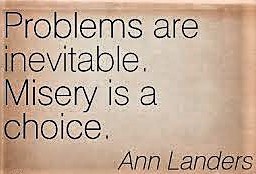
Solomon also tells us in Ecclesiastes 9:10 “Whatever your hand finds to do, do it with all your might.” This tells me that although life is not fair, we still have choices. We can put our energy into making the best of bad situations, trying to improve our circumstances, and striving to go forward. We can be better people, not bitter. We can have peace, not anger. Problems are a given in life, but misery is optional.

The only way to have this peace is to focus on Jesus. Was it fair for Paul to have all sorts of difficulties when he was doing God’s work? I don’t think so. Yet, he chose the higher ground. Instead of grumbling, he said, “We are hard pressed but not crushed. We are perplexed but not in despair. We are persecuted but not forsaken. We are struck down but not destroyed.” (2 Corinthians 4:1-12) He just picked himself up and went about his heavenly Father’s business.

Is life fair? No! Life is not fair, but how we deal with it can make a big difference in how we fare in life.


Suggestions for practicing this choice…

Don’t be a control freak. We can’t control every situation, so stop trying.

Ask God to help you discern when it’s time to let go and move on.

Learn to take deep breaths during stressful situations. Don’t give into anger and frustration.

Don’t allow yourself to become bitter. Bitterness is like a caustic acid which eats away at the container that holds it.

Repeat his serenity prayer by Reinhold Niebuhr often: “God, grant me the serenity to accept the things I cannot change, the courage to change the things I can, and the wisdom to know the difference.” Let’s say a big AMEN to that one!!!


Posted in Uncategorized | Leave a comment