Choose to Be Gentle

By Barbara Dahlgren

Yet Another Year of Choices…

 One fruit of the Holy Spirit is gentleness. (Galatians 5:22) The Greek word for gentleness is “prautes” or “praotes” which means gentle, meek, and to have a “grace of the soul.” Gentleness and meekness are interchangeable in some Bible translations like the NKJV.

The Bible places great importance on gentleness or meekness. It says the meek will inherit the earth. (Matthew 5:5) However, meek isn’t a very popular or common word today. Our society is obsessed with being aggressive. To get ahead you must swim with the sharks. It’s a dog-eat-dog world and wimpy people get gobbled up pretty fast. However, associating meekness with weakness is a big mistake. Gentleness or meekness is not weakness. Jesus described Himself as a meek man and He was far from a weak, spineless jellyfish, flip-flopping around issues. (Matthew 11:29) He was not indifferent to His surrounds or the needs of others.

Many legendary historical figures like Lincoln, Gandhi, Einstein, and Mother Teresa have been gentle and meek, but not timid. They didn’t need to project their importance to others. They had purpose and the ability to stand in the face of every obstacle thrown their way. This inner resolve is very precious to God. (1 Peter 3:4) It actually takes a great deal of inner strength to be really gentle. Gentleness has been described as strength under control.

It’s interesting to note that the word “gentle” was rarely heard before the Christian era, and the word gentleman was not known. This high quality of character was actually a direct by-product of the Christian era.

Being gentle or meek translates into what we think of ourselves and we what we think of others.

How do we treat others when we have power over them? Blessed is the person who doesn’t think more highly of himself than he ought to when others are praising and promoting him as compared to the time in life when he was a virtual nobody.

We need to be gentle in the words we speak. (Proverbs 15:1; Proverbs 25:11-15) We need to be gentle in how we treat others. (1 Thessalonians 2:7) Our gentleness should be evident to all. (Philippians 4:5) It’s not our beauty God values, but our gentle spirit. (1 Peter 3:4) A gentle spirit is not confrontational. (1 Corinthians 4:21) A spirit of gentleness is kind to those who make mistakes and knows that “there but for the grace of God go I!” (Galatians 6:1) God called us to walk with a spirit of gentleness. (Ephesians 4:1) When called upon to give an answer, one who possesses godly gentleness does so confidently – not with an “in your face” attitude, but one with gentleness and respect. (1 Peter 3:15)

Consider this… People with gentle spirits do not impute wrong motives to others while self-justifying their own behavior which is illustrated in this narrative:


The Other Fellow

When the other fellow takes a long time, he’s slow.

When I take a long time, I’m thorough.

When the other fellow doesn’t do it, he’s lazy.

When I don’t do it, I’m busy.

When the other fellow does something without being told, he’s overstepping his bounds.

When I do it, I’m taking initiative.

When the other fellow overlooks a rule of etiquette, he’s rude.

When I skip the rules, I’m original.

When the other fellow pleases the boss, he’s an apple-polisher.

When I please the boss, I’m cooperating.

When the other fellow gets ahead, he’s getting the breaks.

When I manage to get ahead, it’s because I’ve worked hard.


 One final thought…

A gentle spirit will treat those under them like they would want to be treated – not just because it’s the right thing to do, but because they know they might be working for them one day.


Posted in Uncategorized | Leave a comment

Choose to Make Wiser Decisions

Yet Another Year of Choices

By Barbara Dahlgren
 

We all make hundreds of decisions every day. Some are life changing; some are not. Yet each decision helps mold who we are as individuals. Each day we decide what we will wear, what we will eat, where we will go, what we will do, how we will spend our time, what we will say, where we will work, who we will be with, and so on. A simple life is easier to manage, but most of us do not lead simple lives. We live complicated lives filled with endless options. The more options we have, the harder it is to make wise decisions.

While what we decide to eat for lunch or wear to work may not need a list of pros and cons (although, some of us might benefit from doing that), other decisions take more thought and consideration. In those cases, it might be easier if we keep a few of the following principles in mind.

Pray about every decision. Bring concerns to God and ask Him to be actively involved in the decision making process. (Philippians 4:6-7) However, bear in mind that God’s major concern is not our comfort but that God be glorified, which should be our focus as well. (1 Corinthians 10:31)

To make wiser decisions we have to know about wisdom. A good start is reading the book of Proverbs which was written specifically for us to gain wisdom. (Proverbs 1:1-9) True wisdom comes from God. If we ask God for wisdom, He will give it to us. (James 1:5-8) However, God doesn’t play games. If we ask with a “double-mind” or not really wanting God’s wisdom, but asking Him out of a false sense of lip service, don’t expect much. God doesn’t just funnel wisdom into our minds. He expects us to do our part.

Seek wise counsel from those who are knowledgeable about the decision to be made. Seek counsel from those who can point out a spiritual perspective. Seek counsel from lives that could be affected by a decision, such as a spouse. Many fail because they have not taken the time to seek wise counsel. (Proverbs 11:14; Proverbs 12:15)

Heed the examples of others. The Bible is a history of those who made wise decisions and not-so-wise decisions. The world is full of such examples as well. However, many foolishly think they can make unwise decisions but it will turn out just fine for them – even though it didn’t turn out fine for anyone else. We tend to think we are the exception to the rule.

Count the cost. (Luke 14:28-30) Think of the long-term effects of a decision. Gather all the information. Get the facts. Don’t get caught up emotionally in a moment. Take your time. Good deals come and go all the time. We don’t need to buy now so we don’t miss the golden opportunity. Avoid making hasty decisions. Try listing options – pros and cons. We always have options. While it’s true some options might run the gambit from bad to worse, there are still options to be evaluated. Usually some option will stand out, but there will always be unclear concerns.

Calculate the risks. There are risks in every decision. I read recently about a man who asked a financial advisor if he should take his $3.5 million and use it for a business venture that could give him $25 million. The advisor said, “What can $25 million do for your family that $3.5 million can’t do? It’s too risky and jeopardizes your family’s security.” The man gambled and lost. His family was saddled with bankruptcy and debt. Even the benefits of a temporary gain could be offset by a permanent loss if risks aren’t considered. The Bible says, “What good is it if a man gains the whole world, but loses his soul?” (Matthew 16:26; Mark 8:36)

Consider this… Decisions aren’t always lumped into right and wrong. If they were, they would be easier to make. It helps to know who we are in Christ and if a decision will help or hinder our walk with Him. However, we don’t always get clear answers from God about specific decisions. God never promised to give us all the answers. The Bible doesn’t tell us what to do in every circumstance, but it gives guiding principles to help us make wiser decisions. We are the ones who have to put those principles into practice.

One final thought…

Some think it’s good to follow your heart when making decisions, but be sure to consult your head in the process.


Posted in Uncategorized | Leave a comment

Choose to Cherish God’s Word

Yet Another Year of Choices
By Barbara Dahlgren


Many do not understand what a blessing it is to have a Bible readily available to read. Today we don’t have to wait for Moses to come down from a mountain with a tablet of stone to hear what God has to say. We don’t have to wait for Paul’s next parchment epistle to arrive in the mail. We have access to God, His thoughts, and His example at our fingertips. Do we realize what a privilege that is?

In biblical times the average person did not have access to a Bible. In those days only the religious leaders had a copy of the Bible and probably not in total. That’s why public reading of Scripture was important. Paul refers to this in Timothy 4:13: “Till I come, give attendance to reading, to exhortation, and to doctrine.”

I’m not sure what scrolls or parchments New Testament leaders had access to, but I do know that people weren’t just grabbing their Bibles and heading over to Joe’s house for an impromptu Bible study. Many at that time were illiterate. When the Bereans were commended for searching Scriptures daily, they were making an effort to get together with someone who could read and had access to portions of the Bible. (Acts 17:11) Reading or studying the Bible was a shared activity with people supporting and encouraging one another.

Once the Bible was canonized, copies of the Scriptures were copied by hand. Emperors like Constantine or religious authorities would sanction that Scriptures could be copied by scribes. This was a huge, laborious undertaking. We cannot imagine what it took to produce just one hand copied version of the Bible. Each word had to be carefully formed in ink with no room for error since there was no “Wite-out” or “Correcto-type” available.

During the Middle Ages, around 600 to 1400 AD, several thousand monasteries were established across Europe to copy the Bible. Teams of scribes and artists produced magnificent parchments filled with beautiful artwork. Most people in the Middle Ages were illiterate so these pictures, designs, and illustrations were very popular.

Of course, a lot of these Bibles were huge and expensive – not available to the common man. They would be put on display at some churches, monasteries, and universities. Years ago I saw some of these magnificent manuscripts displayed at the Getty Museum in Southern California. Unbelievable works of art!

When the printing press came along in the 1400s, the flood gates of information became available to ordinary, everyday people. Many were skeptical of this new invention, but actually the printing press was the Internet of its time. Eventually literacy and access to books became widespread. The Bible became accessible to the average person – people like you and me.

Consider this… When something is readily available, it is not always appreciated. It’s taken for granted and not valued. Christians can’t afford to do this with God’s Word.

Do we long to understand God’s precepts, His principles for living a happy, productive life? (Psalm 119:40) Do we allow God’s Word to be a lamp to guide our steps? (Psalm 119:105) God wants His Word to be a vital part of our lives. He wants it written in our hearts, taught to our children, and discussed. (Deuteronomy 6:6-9) God wants His Word cherished!

Here’s a final thought…

Would you rather be without a Bible or your cell phone?


Posted in Uncategorized | Leave a comment

Choose to Make Your Words Sweet

Yet Another Year of Choices

By Barbara Dahlgren

Proverbs 16:24 says, “Pleasant words are like a honeycomb, sweetness to the soul and health to the bones.”

We all know there are many ways our words can get us into trouble. That’s why scriptures encourage us to guard against lying, swearing, gossiping, complaining, grumbling, and so on. However, the focus of Proverbs 16:24 is using words for good. Loving words! Gracious words! Caring words! Pleasant words! These kinds of words are sweet to our souls and possess a healing power, making us happier and healthier. They are good spiritually and physically.

Using an analogy about honey with words is pure genius. (Yes, the Bible is the inspired Word of God!) Honey not only tastes sweet, but it has health benefits as well. From ancient times, honey was used as a food and as medicine. In fact, ancient Egyptians made offerings of honey to their gods. Here may be a few reasons why…

Honey is an all-natural, high-energy food loaded with antioxidants. It’s used to help suppress coughs and reduce allergy symptoms. Perhaps the most amazing fact about honey is that it’s a natural antibiotic. When applied to a burn or wound, it promotes healing because of its antibacterial and anti-inflammatory effects. No wonder honey is used as an analogy of using our words like a honeycomb – sweet to the soul and healing to the bones.

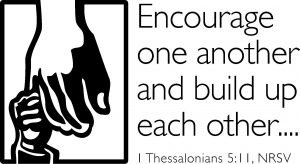
Here are some effects of using words for the good of others: A wise tongue promotes healing. (Proverbs 12:18) Good words make a heart glad. (Proverbs 12:25) A soothing tongue is like the tree of life. (Proverbs 14:4) Words of edification impart grace to hearts. (Ephesians 4:29, 1 Thessalonians 5:11)

When we are weighed down by the troubles of this world, one word of kindness can lift our spirits. A note of appreciation, a word of thanks, or a nice comment can help anxieties fade away. I’m not talking about false flattery or just telling people what they want to hear. That’s the wrong use of words. I’m talking about words of edification – words that build up others, not tear them down. We need to be honest, not cruel.

Think of words of affirmation and use them with others often. Mark Twain said, “I can live for two months on a good compliment.”

Consider this… Maybe your mother was right when she said, “If you can’t say anything nice, don’t say anything at all.” About ninety percent of the time that’s pretty good advice to follow. When we must give instruction or guidance, we should do so with kindness. After all, a spoonful of honey can make the bad taste of medicine easier to swallow.

Here’s a final thought…

If we make our words sweet, they will be much easier to eat – if we have to!


Posted in Uncategorized | Leave a comment

The Choice is Yours

Choices change our lives…

By Barbara Dahlgren

Each New Year we make resolutions to help us change our lives for the better. Although we usually have every intention of keeping them, all too soon they are abandoned because change is hard. Most of us want changes to instantly happen without any effort on our part.

We think if we write them down they will miraculously come to pass. Unfortunately, that’s not how it works.

That’s why for the past few years I’ve resolved not to make resolutions, but to focus on daily choices instead. So my blogs have been devoted to choices and will be until I exhaust my idea file about choices. Hmmm??? Not sure when that will be, but one things for sure, we will never exhaust our need to make choices. We face them daily.

Some choices are proactive and some are a little more passive, but just as important. In other words, what we choose not to do is as important as what we choose to do. On the surface, consciously “choosing not” to do something may seem complacent, perfunctory, or lazy. I assure you that it is not any of these things. In fact, what we “choose not” to do can take a great deal of thought and self-control, plus save us a lot of present and future trouble. Ultimately, what we choose to do or not do greatly impacts our lives and the lives of those around us.

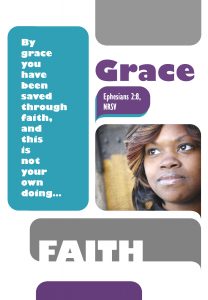
Here are some givens in life: God has forgiven us for our sins. Nothing we can do will ever earn us salvation because it is a gift from God. (Ephesians 2:8) Nothing we can do will make God love us anymore than He already does.

However, even though God gives us salvation, grace, and love, He does not automatically give us good habits or moral character. Those qualities are determined by the choices we make.

Right choices bring peace of mind; bad choices bring difficulty.

God does not need to zap us when we do something wrong, because wrong choices bring their own penalties. When we make wrong choices, we punish ourselves. It’s the cause and effect principle. What we sow, we reap. The seeds we sow today determine the harvest we reap tomorrow. Although God always forgives us when we make poor choices, the effects remain and we have to deal with and live with them. Choices set off a chain of events which shape our lives and sometimes the lives of those around us.

While it is that true time and chance happen, many of our problems could be avoided if we trained ourselves to make better choices. A lot of trials are brought on because of our poor choices; other trials may not be our fault, but still we must choose how to respond to them. So there is always an element of choice in everything we do.

Consider this… The Bible is full of exhortations encouraging us to walk in the way of the Lord. As we read the Bible we can listen for God’s voice whispering to us, “This is the way, walk ye in it.” (Isaiah 30:21) God exhorts us to do this or don’t do that, but the choice is ours.

Some choice quotes about choices…

“We all make choices, but in the end our choices make us.” ~Ken Levine, video game designer and author

“It is our choices that show what we truly are far more than our abilities.” ~J.K. Rowling, author

“When it snows you have two choices: shovel or make snow angels.” ~Anonymous

“Do not envy a man of violence and do not choose any of his ways.” ~Proverbs 3:31

“One’s philosophy is not best expressed in words. It is expressed in the choices one makes. In the long run, we shape our lives and we shape ourselves. The process never ends until we die. And the choices we make are ultimately our responsibility.” ~Eleanor Roosevelt

“It’s not hard to make decisions when you know what your values are.” ~Roy Disney, co-founder of Walt Disney Productions


Posted in Uncategorized | Leave a comment

Choose to Have a Happier New Year

Yet, Another Year of Choices

By Barbara Dahlgren

Each New Year brings resolutions we make for changes that will better our lives. Although we usually have every intention of keeping them, all too soon they are abandoned because change is hard. Most of us want changes to instantly happen without any effort on our part. We think if we write them down they will miraculously come to pass. Unfortunately, that’s not how it works.

That’s why for the past few years I’ve resolved not to make resolutions but to focus on daily choices instead. I have shared these choices with you on this weekly blog. Last year we focused more on passive choices – things we chose not to do. On the surface, consciously “choosing not” to do something may seem complacent, perfunctory, or lazy, but if you’ve followed this blog you will know it’s not. In fact, what we “choose not” to do can take a great deal of thought and self-control, plus save us a lot of present and future trouble. However, this year we will continue with more proactive choices – things we choose to actively do.

Choices we make can affect our lives and the lives of those around us. Right choices can bring peace of mind; wrong choices bring problems. While it’s true God can bail us out of wrong choices, He usually chooses not to do that so we can learn lessons. Even though there are life-lessons we need to learn, our wrong choices will never negate God’s love and forgiveness for us. Those are constants!

Hopefully we all know that God has forgiven us for our sins – past, present, and future. Nothing we can do will ever earn us salvation because it is a gift from God. (Ephesians 2:8) Nothing we can do will make God love us anymore than He does. Christians who perform lists of do’s and don’ts, trying to get God to love them, do not understand God’s grace. God’s love is freely given to us!

However, even though God gives us salvation, grace, and love, He does not automatically give us good habits or moral character. Those qualities are determined by the choices we make. That’s why Paul encouraged the Philippians to put into practice what they had heard or seen in him. (Philippians 4:9) As a result of practicing these right choices, they would receive peace of mind. Jesus said those who practice what He said are like those who build on a solid foundation. (Matthew 7:24)

Consider this… God does not need to zap us when we do something wrong, because wrong choices bring their own penalties. When we make wrong choices we punish ourselves. It’s the cause and effect principle. What we sow, we reap. Although God always forgives us when we make poor choices, the effects remain and we have to deal with and live with them.

While it is true that time and chance happen, many of our problems could be avoided if we trained ourselves to make better choices. A lot of trials are brought on because of our poor choices; other trials may not be our fault, but still we must choose how to respond to them. So there is always an element of choice in everything we do.

So here we go with yet another year of choices! If we resolve to practice making better choices every day, we will have a happier New Year – and so will everyone around us.


Some choice quotes about choices…

“It’s not hard to make decisions when you know what your values are.” ~Roy Disney, co-founder of Walt Disney Productions

“We all make choices but in the end our choices make us.” ~Ken Levine, video game designer and author

“When you have to make a choice and don’t make it, that is in itself a choice.” ~William Jennings Bryant, American orator and statesman

“One’s philosophy is not best expressed in words. It is expressed in the choices one makes.  In the long run, we shape our lives and we shape ourselves.  The process never ends until we die.  And the choices we make are ultimately our responsibility.” ~Eleanor Roosevelt

“When it snows you have two choices: shovel or make snow angels.” ~Anonymous


Posted in Uncategorized | Leave a comment

Choose Not to Miss the Miracle of Emmanuel

One More Year of Choices

By Barbara Dahlgren

I love the Christmas season. I love the sparkly lights on the houses in the neighborhood. I love our artificial Christmas tree loaded down with inexpensive ornaments that have priceless meaning to family members. I love lyrical Christmas carols being played as we shop. I love trying to find the right gift for each loved one. I love sneaking a little candy wrapped in red and green foil from the bowl filled to the brim on the coffee table. I love watching old movies like It’s a Wonderful Life, Christmas in Connecticut, and Miracle on 34th Street every year.

Speaking of miracles, I love the miracle that Christmas stems from – the birth of Christ. While all the miracles surrounding Christ’s birth are impressive, to me the real miracle of Christ’s birth is that our Savior Emmanuel came to earth to be with us. Emmanuel means God with us.

“Behold, the virgin shall be with child, and bear a Son, and they shall call His name Emmanuel, which is translated, ‘God with us.’” ~Matthew 1:23

God with us! What a miracle! It’s one I don’t want to ever lose sight of in the midst of all the other Christmas festivities. God desires to be with us – so much so that He came to us. He is with us all the time. He’s with us in the good times and bad times. He’s with us when we feel like we can’t go on. He’s with us when our hearts are breaking. He celebrates with us. He cries with us. He feels our pain, plus helps us cope, keep perspective, and survive.

“Yea, though I walk through the shadow of death, I will fear no evil for you are with me.” ~Psalm 23:4

Many want to keep Christ in a manger or at a distance instead of letting Him be a part of our lives. As an added bonus, He will never leave or forsake us.

“For He Himself has said, ‘I will never leave you or forsake you.’” ~Hebrews 13:5

Consider this… Christmas is a wonderful time of year. We may receive all kinds of gifts from friends and family, but the greatest gift of all is Jesus Christ. The very fact that He wants to be with us should fill us with joy – not just at Christmastime, but every moment of our lives. If we let Him live within us, we will never have to feel alone again.


Suggestions for practicing this choice…

Always remember that your life has purpose. Watch It’s a Wonderful Life. There are many life lessons there. Just think about what Clarence the angel writes to George in the last scene: “Remember, George, no man is a failure who has friends.” Maybe you think you don’t have any friends. Think again! Jesus is your friend! (John 15:15; John 15:13)

My favorite Christmas quote comes from Taylor Caldwell. “I was never alone at all. And that, of course, is the message of Christmas. We are never alone. Not when the night is darkest, the wind is coldest, the world seeming indifferent.” Just think of the phrase “the message of Christmas is that we are not alone” and repeat it often. It does wonders for your frame of mind.

The above Taylor Caldwell quote comes from her short story A Christmas Miracle. It’s worth reading every Christmas.

Don’t isolate yourself at Christmastime. Invite someone over to share a glass of bubbly. Accept an invitation to someone’s house and bring some bubbly. If you think you have no one to share Christmas with, spend it with Jesus. He loves your company.

Memorize 2 Corinthians 9:15. “Thanks be to God for His indescribable gift!” The gift of Jesus is priceless. Give thanks to God for it often.


Posted in Uncategorized | Leave a comment

Choose Not to Be a Scrooge

One More Year of Choices

By Barbara Dahlgren

One of my favorite stories is A Christmas Carol by Charles Dickens. Standing the test of time, this tale has been a consistent part of the literary, theatrical, and social scene since it was first published shortly before Christmas in 1843. 6,000 copies were sold in its first week of printing and within the year it inspired nine London stage productions.

Every year since, countless A Christmas Carol film, theater, opera, radio, and television productions have followed. Variations of the plot have been done, redone, improvised, used, abused, and overdone. Even animated celebrities like Mickey Mouse, the Muppets, Bugs Bunny, Mr. Magoo, and Barbie have starred in their own versions. It’s really quite phenomenal. And guess what? I love them all!

A Christmas Carol deals with two of Dickens’ favorite themes: social injustice and poverty. Ebenezer Scrooge represents those who thought their wealth and status gave them the right to sit in judgment of the poor, rather than help them dig their way out of poverty. Bob Cratchit, his loyal employee, represents the poor working man just trying to eke out a meager living for his family. One of the peripheral but pivotal characters is Cratchit’s young, disabled son, Tiny Tim. In spite of Tiny Tim’s dire circumstances, he remains cheerful.

This story has become so much a part of history that the word “scrooge” has crept into the English language. It means a person unwilling to give to others. He’s mean, miserly, selfish, and stingy. He hates people. A scrooge mirrors characteristics of Ebenezer Scrooge. “Bah humbug!” he says to anyone who would wish him a merry Christmas. Scrooge has no good will for fellow humans.

However, what really makes Dickens’ book so good is that Ebenezer Scrooge changes his outlook. After he encounters three ghosts/spirits (Christmas Past, Christmas Present, and Christmas Future) who help him see how he really is, he has an epiphany. He doesn’t want to be remembered as a penny-pinching grouch. He’s an old man, but decides that for the rest of his life he will change his selfish ways. He becomes a good man, a true friend, and compassionate employer. He gives money to charity workers, buys gifts for everyone, spends time with his estranged family, helps the Cratchits, becomes a second father to Tiny Tim, and “it was always said of him, that he knew how to keep Christmas well, if any man alive possessed the knowledge.”

All can relate to underlying themes throughout A Christmas Carol.  Timeless themes like do unto others as you would have them do unto you, what goes around comes around, family is important, money does not bring happiness, love lasts all year long, redemption, forgiveness, and being thankful are just a few that still resonate. All worthy concepts to think about not just at Christmastime, but all year long.

True, it does not emphasize the birth of Jesus, but it does have certain nuances that make us think. When Tiny Tim and his father go to church on Christmas Day, Tim makes a brief reference to Christ by saying we should remember the One who made lame beggars walk and blind men see. And as far as I’m concerned, you can’t get a better ending than Tiny Tim saying, “God bless us, every one!”

Consider this… We are never too old to change. How do we want to be remembered? As Christians we should want people to see a reflection of Christ in us. That may require us to make a few changes. Christ came to earth to give us an example to follow. It definitely wasn’t one of a penny-pinching grouch. It was one of being generous and caring towards others. That’s something to think about not just at Christmastime but every day of our lives.


Suggestions for practicing this choice…

Go see a live performance of A Christmas Carol or watch one of the film versions. Look for themes mentioned in this blog.

Ask God to help you be a more generous, loving, and caring person.

Look for a way to bless the life of another person. A simple act of kindness can mean a lot. Even a smile can lift another’s spirit.

As Christmas carols are being played, actually reflect on the meaning of the songs as you hum along.

When tempted to be in a negative mood say, “God bless us everyone!” It will do wonders for your daily outlook.

Posted in Uncategorized | Leave a comment

Choose Not to Forget the Real Christmas Story

One More Year of Choices

By Barbara Dahlgren

Some say the story of Christmas begins with the birth of the Christ child, but long before Jesus was born there was something wonderful…the promise of His coming and the promise of redemption for mankind.

Psalm 130:7-8 told us, “O Israel, put your hope in the Lord, for with the Lord is unfailing love and with Him is full redemption. He himself will redeem Israel from all their sins.”

Jeremiah 23:4-5 said a day was coming when God would raise up a king who would reign wisely and do what was right. His name would be “The Lord Our Righteousness.”

Isaiah 11:2-5 said the Spirit of the Lord would rest on Him, plus the spirit of wisdom, understanding, counsel, power, knowledge, and fear of the Lord. He would not judge by what He saw or heard but with righteousness.

Isaiah 9:6-7 told us, “Unto us a child will be born, to us a Son is given, and the government will be on His shoulders. He will be called: Wonderful, Counselor, Mighty God, Everlasting Father, and Prince of Peace.”

Over 300 prophecies were fulfilled through Jesus’ birth, His life, His ministry, His death and resurrection. Not just the promise of Christ’s coming was revealed in scripture but the details of how it would take place. This truly was a miraculous event!

He would be from the tribe of Judah (Genesis 49:10; Luke 3:3), a descendant of Abraham (Genesis 12:3; Matthew 1:1), Isaac (Genesis 17:19; Luke 3:24), Jacob (Numbers 24:17; Matthew 1:2), Jesse (Isaiah 11:10; Romans 15:12), and David (Jeremiah 23:5-6; Matthew 1:1).

He would be born of a woman (Genesis 3:15; Galatians 4:4), a virgin (Isaiah 7:11; Luke 1:26-31) in Bethlehem (Micah 5:2; Luke 2:4-7), worshipped by shepherds (Psalm 72:9; Luke 2:8-15) and honored by kings (Psalm 72:10, 17; Isaiah 60:3; Matthew 2:1-11). The slaughter of children (Jeremiah 31:15; Matthew 2:16-18) and flight to Egypt (Hosea 11:1; Matthew 2:14-15) were foretold as well. The list goes on and on.

I love the thought of jolly old St. Nick, stockings hung with care, sleigh bells jingling in the snow, trees twinkling with lights, halls decked with holly, colorful presents lovingly wrapped, a snowman coming to life, Christmas card greetings, kissing under the mistletoe, and a red-nosed reindeer. I laugh when I hear “Grandma Got Run Over by a Reindeer” and secretly wish Santa would slip a sable (faux sable, if I want to be politically correct) under the tree for me. It all adds to the festivities!

But consider this… None of those things can compare with God’s gift of redemption to all. Let us never forget that without Christ there is no Christmas.

So this Christmas season as you sing your favorite carols, may you remember the birth of Jesus. Only in honoring Christ can we truly partake of the genuine joy in celebrating!


Suggestions for practicing this choice…

Hang a stocking for Christ and have each one in the family write a note of appreciation to Him for specific blessings.

Read Luke 2:1-21.

Consider attending a Christmas Pageant at a local church.

Reach out to others less fortunate. (Matthew 25:42-25)

From now until Christmas, thank God every day for His indescribable gift – Jesus. You might consider doing this often all year long. (2 Corinthians 9:15)


Posted in Uncategorized | Leave a comment

Choose Not to Be Stressed

One More Year of Choices

By Barbara Dahlgren

Stress used to be an engineering term. Years ago people were anxious, nervous, worried, or fretful but not stressed. In the 1950s stress became a psychological term referring to conditions brought on by major catastrophes in a person’s life such as death, divorce, or life threatening disease. Today just the thought of getting out of bed to face another day can cause stress.

Here are some things recent research says causes stress: being married, not being married, having children, not having children, having a job, not having a job, working more than 40 hours a week, working less than 40 hours a week, retirement, your spouse’s job, your spouse not having a job, having sex, not having sex, taking a vacation, not taking a vacation, having family outings, not having family outings, playing the stock market, not playing the stock market, and so on and so forth. You might say, “You’re stressed if you do and you’re stressed if you don’t!” It has us coming and going.

Many turn to religion thinking that God in His infinite wisdom will miraculously take away all stress. Unfortunately, the Christian way of life is not promised to be stress free. Just look at the great leaders in the Bible and ask yourself, “Were they stressed?”

Abraham and Sarah were elderly when they had Isaac. Noah had to build an ark without a cloud in the sky. Rahab put her life on the line for spies. Elijah hid in a cave from Jezebel. Jonah was swallowed by a big fish. Daniel was cast into a lion’s den. David fled for his life from Saul. Job lost everything he had.

Joseph was a know-it-all teenager who couldn’t keep his mouth shut, alienated his brothers, was sold into slavery and cast into prison for many years before he became a prominent advisor to the king of Egypt.

Moses killed a man, fled Egypt for many years, agreed under duress to lead the children of Israel to freedom, dealt with mumbling Israelites, struck a rock in frustration, and didn’t even get to see the promised land.

Do you think they were stressed?

We live in a 24/7 world. Society demands more and more of us. However, many times we give in to demands when we don’t need to. Only we can decide what our personal limitations and priorities are. Even with that, we only have so much control. Stress is a part of life.

Consider this… God doesn’t take away stress factors, but He can help us cope, give us peace, and walk with us every step of our way. Focusing on Jesus and not our circumstances can help us keep perspective and remain calm during the stresses of life. Various stresses will come and go, but Jesus is the same yesterday, today, and forever. (Hebrews 13:8)


Suggestions for practicing this choice…

Since we are entering the Christmas season, here are some ideas for having less stress during the holidays.

During the hustle and bustle of the season, determine to keep Christ in the picture. Say little prayers thanking Him for your blessings throughout your busy, busy days.

Resist the urge to be Martha Stewart or Bob Villa during the holidays. You don’t always have to go bigger for things to be better.

Forgo the “some assembly required” or “needs an expensive battery instead of a AA or AAA battery” gifts. Think simplistically. If Ikea has taught us anything, it’s that “not everything is as easily assembled as they tell you it is.”

Eat healthy and get plenty of rest. If you think you’re stressed now, just wait until you get sick!

Invest in a little Christmas devotional book to help you focus on the true meaning of Christmas.


Posted in Uncategorized | Leave a comment