Choose to Have a One Day at a Time Philosophy

Choices change our lives…

By Barbara Dahlgren

Life can be overwhelming and very intimidating. Just thinking about what needs to be done tomorrow and the next day and the next day can drain our energy and make us feel like doing nothing.

Sometimes it’s easier to think of life in smaller increments – like one day at a time or even one moment at a time. I remember the old gospel song One Day at a Time by Christy Lane. She asks God to help her make it through – one day at a time. Sometimes we might even need to ask God to help us make it through – moment by moment.


Here’s a little poem I found in my file that’s worth remembering…

Moment by Moment

Tomorrow’s plan I do not know,

I only know this minute

But He will say, “This is the way,

By faith now walk ye in it.”

And I am glad that it is so,

Today’s enough to bear,

And when tomorrow comes

His grace shall far exceed its care.

What need to worry then, or fret?

The God who gave His Son

Holds all my moments in His hand

And gives them one by one.

~Anonymous

Sometimes when we think of all the things we should do to be a better Christian, it can also get overwhelming. That’s why I have my “just for today” plan. I pick out one quality or characteristic I want to practice and concentrate on doing it “just for today.” Then tomorrow I pick another one. Your list will be different than mine since we all have varying strengths and weaknesses. Here are a few ideas to get you started.

Just for today…

  • I will start my day with a little prayer.
  • I will read a passage from the Bible.
  • I will be happy for someone else.
  • I will secretly do a good deed for someone.
  • I will not criticize.
  • I will tell God specifically something I’m thankful for.
  • I will mind my own business.
  • I will say “please” and “thank you.”
  • I will control my tongue.
  • I will smile a lot.
  • I will not get angry.
  • I will eat a vegetable.
  • And so on and so forth…

Anyway, you get the idea. If we take things we want to do in bite size pieces, it’s not quite as overwhelming or intimidating. Sometimes it’s more profitable to think of what we did get done than all we have left to do.

Consider this… These “just for today” things we do will enhance our lives and the lives of others – even if it is “just for today.”

One final thought… In the words the creator of the Peanuts comic strip, Charles Schulz: “Life is like an ice cream cone; you have to lick it one day at a time.”


Posted in Uncategorized | Leave a comment

Choose to Let Jesus Be the Savior

Choices change our lives…

By Barbara Dahlgren

A “Savior Complex” in psychological terms refers to people who feel the need to save others. Some who enter into professions requiring them to care for others can sometimes think they are a person’s savior. Also, there are certain personalities who gravitate to those they think need saving – those with addictions or behavioral problems. In their desperation to want to help, sometimes they become part of the problem, not the solution.

People with a “Savior Complex” might make sacrifices thinking it is the noble thing to do. Their needs may go unmet because they feel they are laying down their lives for another. To go a step further, some think they are better than most because of the suffering they endure for others.

While their motives may be pure, sometimes their actions are not beneficial to all concerned.

Caregivers who refuse to take a break thinking, only they can attend to the needs of a loved one, soon find themselves burned out. Those who think they are helping someone with an addiction or destructive behavior by never letting them take responsibility for their actions become part of the problem, not the solution.

In the Christian world, we sometimes call this same condition a “Messiah Complex.” Some in ministry think it’s their job to save people. In their quest to become all things to all people, they end up trying to please everyone which, as we all know, is impossible. They spread themselves thin by never delegating and thinking only they can handle a particular situation. Needy people can take advantage of this. They become dependent on us, take up enormous amounts of time, and sap our energy.

If we allow one or two people to drain all our time and energy, then we have nothing left to give others or ourselves. It is not our job to solve everyone’s problems. On the other hand, we shouldn’t minimize someone’s situation. What may seem like a minor problem to us may feel enormous to them. We can still care about them as they learn to solve their own problems. And our ultimate job is to point them to the One who loves them unconditionally and can actually help them solve problems – Jesus Christ. We are not the Messiah. Jesus is!

Consider this… Only Jesus can heal! Only Jesus can redeem! Only Jesus can save! We need to let Jesus be the Savior and the Messiah!

One final thought… If we keep getting in the way, Jesus never has a chance to do His thing!


Posted in Uncategorized | Leave a comment

Choose to Witness the Right Way

Choices change our lives…

By Barbara Dahlgren

In the Christian community, when we hear the word “witness” we think of one who stands before people and testifies about what God has done in their lives. Many might say, “I can’t do that!” They feel shy about verbally sharing Christ with others. This is indeed one way to witness, but the truth is that if we are Christians we are daily witnessing to others by how we live our lives.

It is said that the reason people come to Christ is because they have known a Christian. By the same token the reason many have not come to Christ is because they, too, have known a “Christian.” Christians are witnessing whether they want to or not.

Acts 1:8 “…you shall be witnesses to me in Jerusalem, and all of Judea and Samaria and to the ends of the earth.” This scripture actually has a double meaning. It’s true that it can refer to taking the gospel around the world. But those to whom Christ was speaking lived in Judea and Samaria, so they were witnessing right where they lived. So wherever we are, wherever we live, or wherever we go – we are witnessing to those around us about Christ. What kind of witnesses are we?

The image some may have of a Christian is a kind, caring, joy-filled, authentic person who may fall short but strives to follow Christ. Another image could be of one who is dull, lifeless, easily angered, obnoxious, intolerant, and rigid – full of pomp and circumstance with no substance. Which would be the better witness?

Even those who seek to appear to serve God can fall short. The example of the Pharisee in Luke 18:9-14 comes to mind. He thought he was really going above and beyond because the law said he only had to fast once a year on the Day of Atonement, but he fasted twice a week. He even gave tithes of all he possessed, but unfortunately, he didn’t have a relationship with God. It’s this ongoing relationship with God that keeps us Christ-centered and authentic.

Or what about Christians who serve diligently at church, but neglect their families? Or Christians who go to church each week just to pacify their need for religion? Some Christians are like Jekyll and Hyde, acting one way at church and another during the week.

What about Christians who want to put on an outward show by wearing crosses around their necks, putting fish emblems on their cars, and carrying Prayer of Jabez key rings? Of course there is nothing wrong with any of these things if the motive is right. The other extreme might be Christians who don’t want to have any outward show of Christianity and take pride in the fact that they’ve led a Christian life but have never pointed anyone to Christ. All miss the mark!

Consider this… To be a sincere witness for Christ, we Christians should examine ourselves to be sure we are in the faith. (2 Corinthians 13:5) The Word of God should dwell in us and whatever we do “…in word or deed, do all in the name of the Lord Jesus, giving thanks to God the Father through Him.” (Colossians 3:16-17)

God wants a daily relationship with us. After all, we are His children. Christians are children of the living God. What we do doesn’t determine who we are. Who we are as children of God should determine what we do. When we realize this, witnessing in the right way becomes easier.

One final thought… Live your life as if people are watching, because they are.


Posted in Uncategorized | Leave a comment

Choose to Understand What Witnessing Means

Choices change our lives…

By Barbara Dahlgren

Christ says that we will be witnesses for Him. You shall be witnesses to me in Jerusalem, and all of Judea and Samaria and to the ends of the earth.” (Acts 1:8) Some of us balk at the idea of being witnesses for Christ. Perhaps it’s because we have a false concept about what being a witness really means.

The word “witness” conjures up negative images of Christ being on trial in a court of law and we must testify that he is innocent. But Christ does not need us to defend Him. However, He does want us to attest to what He has done in our lives if someone asks. The Bible says to be ready to give an answer – to those who ask. (1 Peter 3:15) It doesn’t say to go out and cram the gospel down everyone’s throat. And, yes, people do that!

Many think this passage in Acts commands us to go out and witness for Christ. But not every scripture written in the Bible is a command. Some state facts. Let’s reread Acts 1:8. You shall be witnesses to me in Jerusalem, and all of Judea and Samaria and to the ends of the earth.” Could it be that Jesus is stating a fact here? The gospel will spread to the ends of the earth and as it does, Christians will be witnesses for Christ – not by trying to persuade skeptics to follow Him, but by showing how the fruits of God’s Spirit can be manifest in our lives so others will want to follow Him.

If we call ourselves Christians, then our lives are a witness for God. Our lives are either good witnesses or bad witnesses – but they are witnesses just the same. Hopefully our lives are a living testimony for God’s goodness, so others might say something like, “WOW! That person has a peace that passes all understanding. I’d like to have that kind of peace in my life.” We don’t need to beat people into submission to Christ. We just need to reflect the beauty of Christ living in us.

Being a witness for Christ is not as difficult as we may think. We don’t have to convince others to follow Christ. Christ does that. We don’t even have to go out looking for people to “witness” to. God will do that, too. God will make sure we come in contact with the people He wants us to know. He will put it in their hearts to ask us questions about Him that we can answer.

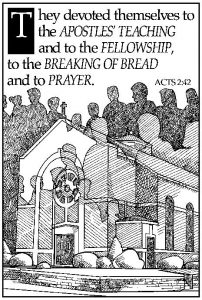
The early church knew this. They continued steadfastly doing what they had been taught. They met together, ate together, worshipped together, and prayed together. They were happy and got along with all the people. (Acts 2:42-47) “And the Lord added to the church daily those who were being saved.” The early church members devoted themselves to living a Christian life. That’s how they witnessed for Christ. They didn’t talk people into becoming Christians. They allowed the Holy Spirit to transform them into what Christ would have them be and then – God added to the church.

Consider this… With this kind of witnessing, God gets all the glory. You see, it’s all about Him – not about us. That’s what witnessing for Christ is all about.

One final thought… When we do what we are supposed to do, God will do the rest.

Posted in Uncategorized | Leave a comment

Choose to Embrace Being God’s Witness

Choices change our lives…

By Barbara Dahlgren  

Jesus told the early church, “You shall be witnesses to me in Jerusalem, and all of Judea and Samaria and to the ends of the earth.” (Acts 1:8) A witness is one who attests to the truth. So this implies that people would be telling others about God’s truth by sharing their first-hand experiences.

Witnesses in biblical times were very important. Most of the people were poor and many were illiterate. The average person couldn’t read or write, so many things weren’t written down or recorded. Therefore, sharing what you had seen, heard, or experienced with others was important. The teachings of Jesus had to be passed on by word of mouth.

The Bible is filled with examples of those who witnessed for Christ in their own way. There was no specific way presented for people to share the gospel. People led by God’s Spirit don’t all witness in the same way. God created us with various personalities. We all have different occupations, strengths, and weaknesses. As unique members of the body of Christ, people use what they have to witness in their own ways. This is true today just as it was in biblical times. Here are some examples of God’s witnesses from the Bible.

 The Blind Man

This man had been blind from birth and Jesus healed him. The Pharisees did not like this. In fact, they tried to say that Jesus could not be from God because Jesus healed him on the Sabbath. Now the blind man didn’t have much education and didn’t wax eloquent in front of the Pharisees. He merely stated that he didn’t know who Jesus was, but he did know one thing. “I was blind and now I see.” (John 9:25)

Peter

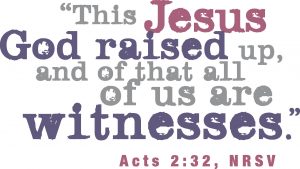
Peter was a tent maker. He was a bit impetuous and made mistakes, yet his love for Christ and enthusiasm for the gospel was almost contagious. He walked on water. Christ seemed to spend a little extra time with Peter. (Matthew 16:15-23) Peter gave the sermon on the day of Pentecost when Jesus’ followers were together in Jerusalem. (Acts 2) He could attest to the miracles, wonders, and signs Jesus performed. He said, “God has raised Jesus to life, and we are all witnesses of that fact.” (Acts 2:32)

Dorcas

Dorcas was a woman ahead of her time, a business owner and philanthropist. As a dedicated follower of Christ, she witnessed through her good works and living the Christian life. (Acts 9:36) She put her faith into action by serving the poor and making clothes for widows. Many mourned when she died in the prime of life. Believers sent for Peter who prayed and she was brought back to life.

Matthew

Matthew was a Christian tax collector which is almost an oxymoron. He left everything to follow Jesus. (Luke 5:27-31) He witnessed through his hospitality. He threw a banquet for Jesus and invited all his tax collector friends. The Pharisees didn’t like this, but Jesus did.

Paul

Paul was an intellectual. He knew the arts, philosophy, and law. He used his logic and reasoning to become all things to all people. (1 Corinthians 9:19-23) He once persecuted Christians but then became one. His changed life was part of his witnessing, but he was also a persuasive orator. He spoke comfortably in Athens, the center of philosophy, and defended himself in court so adeptly that he almost persuaded King Agrippa to become a Christian. (Acts 17, Acts 26:28)

The Samaritan Woman

The Samaritan woman had three strikes against her. First, she was a Samaritan. Jews did not speak to Samaritans because they considered them religiously impure. Second, she was a woman. In those days, women were to be seen and not heard. Her third strike was living in adultery. Yet Jesus chose to speak to this “three strikes and you’re out” loser in the world’s eyes and share the gospel. (John 4) She was so happy about this that she told all her neighbors, family, and friends. She didn’t try to convert anyone, yet many believed. (John 4:39-43) She witnessed by sharing her joy!

Consider this… All followers of Christ witness in one way or another, whether they want to or not. We are all God’s witnesses. It doesn’t matter what our strengths or weaknesses are. We share the gospel with those we come in contact with by the lives we lead. Our lives are our testimony. How we live is our witness. How we live declares the truth about God’s influence in our lives.

One final thought… People would rather see a sermon than hear one.


Posted in Uncategorized | Leave a comment

Choose Not to Expect Too Much

Choices change our lives…

By Barbara Dahlgren

Expectations can be relationship killers. When our expectations are unfulfilled or unrealistic, the result can be frustration, disappointment, discontentment, and even anger. Our expectations can hinder our relationship with friends, spouses, coworkers, and God. So let’s explore three aspects of expectations that will hopefully give us a clearer perspective on the subject: circumstances, people, and God.

Circumstances

Let’s say that life did not turn out the way you expected. Someone else got the promotion you deserved. You lost most of your money in a recession. You totaled your car. You broke your leg. A loved one died. Life is full of “unexpected” setbacks. Life can be tough. Life is full of health challenges, family upsets, work concerns, troubles, grief, pain, burdens, afflictions, and unfulfilled expectations. Being a Christian does not make us immune to life’s problems.

We have to look beyond circumstances to find contentment or joy. Paul shares what he learned in Philippians 4:12: “I know what it is to be in need, and I know what it is to have plenty. I have learned the secret of being content in any and every situation, whether well fed or hungry, whether living in plenty or in want.” He learned to live with unsatisfied expectations. Contentment doesn’t come when we have everything we want but when we are thankful for everything we have.

People

People are imperfect. You are a person; therefore, you are imperfect. People will let you down and you will let them down. Not necessarily intentionally, but realistically. If you are basing your happiness and contentment on the performance of others, you will be in a constant state of frustration. We need to let go of preconceived ideas of what we think others should or should not do. Cut people some slack. Don’t take everything that happens personally. Most people are not going out of their way to make your life miserable. They make mistakes – just like you.

Sometimes we place unrealistic expectations on others and vice versa. Even worse, we place unrealistic expectations on ourselves. We strive for perfection instead of progress. Do we really think we can work full-time, look like J. Lo, have perfect children, go grocery shopping, do the laundry, and have immaculate houses? Get a grip! Who are we trying to impress? When we can’t live up to unrealistic expectations, we feel like failures. In God’s eyes, we are not failures. We are His beloved children. (1 John 3:1) We need to look to God, not people, for approval.

God

Many times we expect God to respond in a certain way. When He doesn’t, we doubt His love for us. A young woman might say, “If I do everything God tells me to do, God will bless me with a husband.” Maybe not. A middle-aged woman might say, “If I do everything God tells me to do, my daughter will marry a doctor and give me grandkids.” Maybe not. God makes no such promises. God promises to bless our lives, but that doesn’t mean He gives us everything we want. If we don’t get what we expect from God, will we still love and trust Him?

Habakkuk had determined to love and trust God even if all his crops failed and all his farm animals died. (Habakkuk 3:17 -19) Can we say the same?

What can we expect from God? We can expect God to forgive our sins, extend us grace, give us mercy, and love us. How He manifests this love may not fulfill our unrealistic expectations, but that does not diminish His love for us.

Consider this… If we let go of certain expectations, we cannot be disappointed. Do not expect any particular results from any given situation. This will allow us to give it our full attention without the pressure of living up to any preconceived ideas. We can turn it over to God and trust Him to take care of it.

One final thought… There’s an old saying: Expect nothing; appreciate everything. There may be a kernel of truth there. It would certainly make life easier.


Posted in Uncategorized | Leave a comment

Choose to Live in Awe

Choices change our lives…

By Barbara Dahlgren

Awe is defined as “veneration or wonder inspired by authority or by the sacred or sublime.” Perhaps living in a computer-generated world and being used to 3-D effects can make us desensitized to the beauty around us. As children we were amazed by yellow daffodils and mesmerized by watching ants carry ten times their weight across the yard. Too soon we become jaded and take our sunsets for granted. We no longer see a colorful sky radiant with colorful reddish, pinkish, and orange hues; we just wish the sun would go down so the light will stop shining in our eyes while we’re trying to drive. Somewhere along the way we lose our awe.

G.K. Chesterton said, “This world will never starve through lack of wonders, only through lack of wonder!”  Do we see God’s hand everywhere we go? When we visit a castle high up in the mountains, do we think of God being our fortress? When we see a majestic mountain, do we think of God being our Rock? When we see a massive, leafy oak tree, do we think of being rooted in Christ? When we hear the sound of a child laughing, do we smile and think about God wanting us to become as little children? Seeing God’s hand in everything we see and do can increase our awe. It infuses our ordinary, mundane routine with the spirit of the living God. It changes our perspective. It makes life worth living.

Even from a physical perspective, awe can nourish our souls and help us live better lives. Dacher Keltner, one of the foremost theorists and scholars of awe says, “What the science of awe is suggesting is that opportunities for awe surround us, and their benefits are profound.”  Studies exploring this complex emotion show connections between awe and critical thinking, creativity, better health, and positive social behavior. Feelings of awe actually boost life satisfaction.

Spiritually speaking, we as Christians can sometimes be guilty of losing our awe of God, His creation, and the blessings He bestows. Hebrews 12:28 tell us, “Therefore, since we are receiving a kingdom that cannot be shaken, let us be thankful, and so worship God acceptably with reverence and awe.” There is a fine line in our relationship with God between awe and familiarity.

Yes, we think of God as our friend and father. He wants us to feel close enough to Him to be honest and discuss anything. However, He doesn’t want to be taken for granted. No one does. After all, God is our Creator.

Consider this… Job tells us that dominion and awe belong to God. (Job 25:2) God is also our fortress, high tower, sustainer, giver of every good gift – the list goes on and on. When we lose sight of this awe, we fail to see God as He really is!

One final thought… “He who can no longer pause to wonder and stand rapt in awe is as good as dead; his eyes are closed.” ~Albert Einstein

Posted in Uncategorized | Leave a comment

Choose to Use God’s GPS

Choices change our lives…

By Barbara Dahlgren

GPS stands for Global Positioning System and has become synonymous with any handheld computerized gizmo that helps us find our way in unfamiliar territory. These devices are great, especially for someone like me who has no sense of direction. And although these satellite connected devices have greatly improved through the years, they are still not infallible. Some people have found themselves in random suburban cul-de-sacs, abandoned parking lots, or in the middle of nowhere when trying to follow detailed instructions.

I remember once when my husband and I were traveling through Alabama, we needed to get to a certain road. The GPS kept saying, “Make a U-turn.” My husband kept saying, “That can’t be right.” He has a wonderful sense of direction, so he just turned it off. An hour or so later we were lost. It was then we discovered the GPS was smarter than we thought. We turned it back on, made a U-turn, and finally got to our destination.

Even though there are some mishaps, GPS devices are very reliable mechanisms. When taking a trip, a good GPS lets us know where we are and helps us get to our desired destination without getting lost. A good GPS will tell us, “Turn right. Turn left. Make a U-turn.” And though it may not appear we know where we are going, a good GPS will get us there.

We as Christians are on a journey as well. We need a good GPS with lots of power. We need a GPS that will never leave us stranded in the middle of nowhere. We need a GPS that will never get us lost. We need a GPS that will never take us to the wrong destination. We need God’s Positioning System – a GPS we can always count on!

God’s GPS gives us the Bible to keep us on the right road. God’s GPS lets the Holy Spirit nudge us in the right direction. God’s GPS allows us to have direct contact with its Creator 24/7. That means we are never disconnected from the server. And God’s GPS is infallible. As long as we walk with God, talk with God, and stay in a relationship with Him, we are assured of arriving at our final destination.

There’s an old story about a father who took his young son on a walk in the woods. As they walked hand in hand, he asked the boy, “Do you know where you are? Are you lost?”

The boy looked up at him and said, “How can I be lost? I am with you.”

Consider this… God is the one who takes our right hand and leads us. (Isaiah 41:13) With our hand in His, how can we get lost?

As long as we stay close to God our Father, we will never be lost. God says, “I will instruct you and teach you in the way you should go; I will counsel you and watch over you.” (Psalm 32:8) Now that’s a GPS we can always count on!

One final thought… Trust God’s GPS. When we turn off our connection to Him, we can lose our way and get hopelessly lost.

Posted in Uncategorized | Leave a comment

Choose to Do What Jesus Would Do

Choices change our lives…

By Barbara Dahlgren

“What would Jesus do?” was once a catchy phrase used by the Christian community. People were encouraged to ask themselves this question as a guideline for living the Christian life. Bracelets were sold with the abbreviation WWJD on them as a reminder to act the way Jesus would act.

All in all, it’s not a bad idea – as long as we are sure we know what Jesus would do in a given situation. Too many times we think Jesus likes what we like or hates what we hate. We transpose our preferences to Jesus, rather than His preferences to us. What Jesus would do in some cases might surprise us.

Would Jesus drink beer? Maybe. His first miracle was turning water into wine. I can’t help but think He would have had a little taste, too. But drinking an alcoholic beverage and getting drunk are two different things. (John 2:1-10, Matthew 11:19)

Would Jesus be filled with compassion? Would He cry? Maybe. The Bible says He wept when Lazarus died, even though He had the power to bring him back to life. (John 11:35)

Would Jesus hang around with sinners? Maybe. He did in biblical times. In fact, He was called a friend to sinners. (Matthew 11:19)

Would Jesus get angry? Maybe. Anger in itself is not wrong, but wrong use of that anger is. The Bible says, “Be angry and sin not.” (Ephesians 4:26) Jesus turned over the tables of the moneychangers that were outside the temple, which indicates he was a tad bit upset. (Matthew 21:12, Mark 11:15)

Would Jesus have apprehension? Maybe. The night before He was crucified He asked God if there was any other way. (Matthew 26:39)

Would Jesus get frustrated? Maybe. He seemed a little irritated with three of the disciples when He took them on the mountain so He could pray and they kept falling asleep. (Matthew 26:40)

Would Jesus confuse the issue? Maybe. He certainly did when He said those who don’t eat my flesh and drink my blood have no part of me. Many left His side that day because they thought He was speaking literally. (John 6:53-66)

Would Jesus have a best friend? Maybe. The Bible alludes to the fact that He was a little closer to John than the other disciples. (John 21:20)

Would Jesus have modern ideas? Maybe. He was certainly progressive for His time. He treated all people – even Samaritans and women – with dignity and respect. That was unheard of in those days. (John 4:7-9)

Consider this… Many don’t know what Jesus would do because they don’t know what Jesus did. They rely on what they have heard from others or what they think. It might be helpful to read the first four books of the New Testament without any preconceived ideas about Jesus. What Jesus would do might surprise you.

One final thought… Sometimes our bracelets would be WWPD (What Would a Pharisee Do) rather than WWJD. That should give us something to think about.

Posted in Uncategorized | Leave a comment

Choose to Understand That Bigger Is Not Always Better

Choices change our lives…

By Barbara Dahlgren

For around four hundred years the beauty and splendor of Solomon’s Temple was renowned. For construction, Solomon used thousands of skilled craftsmen, laborers, and artisans and only the finest, most expensive materials – cedar beams, cypress planks, hewn stone, olive wood doors, gold chains, carvings of winged cherubim, and enough gold overlay to rival Fort Knox. This house for the Lord was truly a sight to behold. Nothing could compare.

Also known as the First Temple, it was the first Jewish/Israelite temple in Jerusalem and the religious focal point for worship and sacrifices. So popular was Solomon’s Temple that it was instrumental in Jerusalem becoming the capital of the combined kingdoms of Israel and Judah for two generations and became the place for religious pilgrimage.

Tragically, it was destroyed by fire when the Babylonians, led by King Nebuchadnezzar, invaded and sacked Jerusalem and sent the inhabitants into exile in 586 BC. The destruction of this temple became a symbol of lost grandeur.

When King Cyrus of Persia conquered Babylon in 536 BC, these exiles were allowed to return to Jerusalem to rebuild their city and temple. Under the leadership of Zerubbabel, the appointed governor, construction on a second temple began. It was not an easy task. Not only were they rebuilding the temple, they were rebuilding a city, and it was difficult keeping spirits high in the midst of such devastation. With all the delays and setbacks, seventeen years had passed and they had little more than a foundation – just a small beginning.

Some were lamenting that this new temple would never be as impressive as the first. It would only be a modest version of the original and not nearly as plush or grand. Old timers were saying, “Who is left among you that saw this house in her first glory? And how do ye see it now? In comparison with it, is this not in your eyes as nothing?” (Haggai 2:3)

Amidst discouragement about the project, God told His prophets to let Zerubbabel know the temple would be completed through him. “For who hath despised the day of small things? For they shall rejoice, and shall see the plummet in the hand of Zerubbabel…” (Zechariah 4:10) It might have been a small beginning, but God would see it through. And although the Second Temple might not be a grand as the first, its glory would be greater. “The glory of this latter house shall be greater than of the former…” (Haggai 2:9)

Some wondered how that could be. They didn’t know that one day Jesus would actually walk in it, for this Second Temple was standing during Jesus’ ministry. (Luke 2:46; John 2:13-17) His presence would make it glorious.

God’s presence is what makes a temple glorious. It is not the large building, the expensive craftsmanship, the latest technology, the fine acoustics, the fifty-piece orchestra, the hundred-fold choir, or the scores of people who come. A temple is a building dedicated for religious ceremonies or worship. A temple is only made glorious by God’s presence.

When Solomon built the First Temple he knew it was a place for people to go to worship God – a beautiful, grand place, but just a place. He said, “Behold, heaven and the highest heaven cannot contain Thee; how much less this house which I have built …” (2 Chronicles 6:18, 21 RSV)

We know that God does not dwell in a house made with hands. (Acts 7:48-49) But He does dwell in us. We are a dwelling place for God. (Ephesians 2:18-22) We are God’s temple. (1 Corinthians 3:16-17) His presence in us gives our lives value.

Meeting together with fellow believers is a vital part of the Christian life. (Hebrews 10:25) It provides a time of community worship, fellowship, and encouragement. But the size or grandness of the place where we choose to meet is not as important as actually meeting together. This was true in Old Testament times and is true today. King Solomon’s temple could have been what we think of as a megachurch today. It was wonderful and served a purpose, but the Second Temple was just as valuable.

Now I am not against megachurches. God can be present in a multitude or where only two or three are gathered in His name. (Matthew 18:20) However, it is a mistake to think the greater good for God is accomplished in larger churches rather than smaller ones.

Consider this… God is not in the numbers game. God does not despise the small things – nor should we. (Zechariah 4:10)

One final thought… With God, it’s not the size of the temple that counts. Solomon’s Temple was grand. It was a beautiful tribute to our great God, but that didn’t prevent it from burning down. However, the work of God continued on.


Posted in Uncategorized | Leave a comment